Discoveries in the Details

The most boring, mind-numbing, tedious part of the slide scanning I’ve been doing has to be dealing with the dirt on the scans. Although I did have one slide this week that only took about 5 minutes of work from start to finish, some of them entail hours of work zoomed in close, retouching the scan spot by spot.

And yet… it also means I’m looking at these pictures more closely than I’ve ever looked at them before. And I’m noticing details in them that I never noticed before:

  • In the self portrait of Dad that I posted last week, I noticed he had a pipe in his hand. He almost never smoked a pipe when I knew him; it was always a cigar.
  • There’s a picture of my mother looking at a kiddie train ride somewhere; we’ve never been able figure out where. She doesn’t remember. But you can see a bus in the background, and after lightening up the picture in Photoshop, it looks like it’s in MTA* livery. So it’s probably in the Boston area.
  • There’s a picture of the two of them sitting on a picnic table, which I’d assumed was taken down the Cape. But when I was zoomed in close, I noticed Dad had the same kind of tag on him that was in another picture of my mother, grandmother and great aunt that was taken at Old Sturbridge Village.
  • One of the pictures I worked on in June was a picture of my brother Brian. It’s a long shot of him on a pony, and I’d never looked very closely at the face before. And while their faces are dissimilar, the expression on his face is exactly the same as one I’ve seen on his son Matt’s face dozens of times.
  • In the picture I finished last night, I’m holding Dad’s folding medium format rangefinder camera while he was obviously shooting the slide in 35mm. I don’t remember seeing the medium format pictures–are they prints filed away in albums, or are they the medium format slides I haven’t seen in decades?

I remember Dad’s cameras very well. At the time the picture was taken, I was 14, and I think I was just holding the camera for him–it’s not in the other pictures of me. But eventually he did let me use them, and I used them off and on through the latter years of  high school and college. Both were rangefinders; you focused the camera by superimposing two images in the viewfinder. Neither camera had a light meter or auto exposure; you used the exposure recommendations packaged with the film, and hoped you set the camera right; the batch of slides I’m working on now are almost all a couple of stops overexposed, which I’ve been trying to correct (to some extent) in Photoshop. I tended to favor the 35mm camera because I had a darkroom and was set up for 35mm.

But my photography took a quantum leap upward when I got my first SLR as a college graduation present, about a year after he died. No more guessing at the exposure, just watch the needle. Composition is easier when you can see exactly what the lens sees. And interchangeable lenses! I almost never use the “normal” focal range anymore, but thats what the rangefinder gave you. As good a photographer as Dad was, he was limited by the tools he was using. I wish he’d lived long enough to use my cameras with me.

* Metropolitan Transit Authority: the 1947 – 1964 predecessor to the Massachusetts Bay Transportation Authority (MBTA), also known as the “T”. Boston’s transit agency. 

Slide Scanning Work Flow

I mentioned in my previous post that I’m scanning my father’s old slides. The slides are almost all Kodachromes, spanning the period from the mid 1950s to the 1970s. The eventual goal is to have a set of scans that I can disseminate to family members at a reasonable resolution, without, hopefully, it becoming my life’s work. The slides are in a variety of states: some are well exposed, well processed, and have no color casts, some are underexposed, a set are overexposed, and some have visible color casts. All of them, I’ve found, are filthy, and many are covered with fungus.  What I didn’t realize was that I’d signed up for a restoration project.

Continue reading

Scanning Slides With the Plustek OpticFilm 8200

My Dad was a great photographer. With his 35mm Kodak Signet, and Zeiss Ikon folding medium format rangefinder, he shot a ton of slides that he would bring out from time to time for a “movie” show. Somehow, when he died, I became the custodian of his pictures. When I picked up a Carousel projector for my own slides, I organized his slides into a couple of standing carousel shows.

Every now and then, some family member has asked about getting copies or scans of the slides. Every now and then, I’d think about transferring them to digital, look into the matter, and come away with these options, all of them bad:

  • Have them scanned locally by a camera store, at about a $1 a slide. I did this for a couple of my own slides for a funeral; the quality was atrocious. The scans were blurry, the contrast was muddy, and the color was shitty. There is no way I was going to let them do more.
  • Send them out to a digitizing service. Aside from the inherent risk of sending them out at all, I’ve read that the lower priced services actually send the slides overseas, where labor costs are lower. No way. There are services that do the work domestically, but they’re higher priced—on the order of $3-6 apiece. I may still explore this option for his medium format slides.
  • Get a scanner, and scan them myself. This would entail the cost of the scanner, plus my own time scanning and post processing the slides. For the longest time, the only scanner I could find that looked like it had quality I could live with was the Nikon CoolScan series. The only problem was that they were $2000 – $5000 — and no longer available. Every now and then I would desultorily look at eBay to see if they had one I could afford at the moment, and come away empty handed.
  • Get a cheap scanner. My mother actually got one for me for Christmas, but it turned out to be Windows only. I tend to doubt I would have been happy with the quality.

Finally, about a year ago, I started reading about the Plustek OpticFilm series of scanners. I saw some sample images, and they looked good. I checked the reviews, and they were mostly good, with the caveat that there was a learning curve involved, so last March, I bit the bullet, and bought one. Continue reading

My Sister’s Superhero

My sister and her husband will have been married for nine years this month. Despite the difference in their ages–I won’t say how much, other than to say he isn’t allowed to call my mother “Mum” – it’s obvious they’re very happy together. He brought her into his world of birding, and they share a love of the outdoors. It’s fun watching them together, and seeing them tease each other. Their affection is very clear, and he’s been very supportive of her.

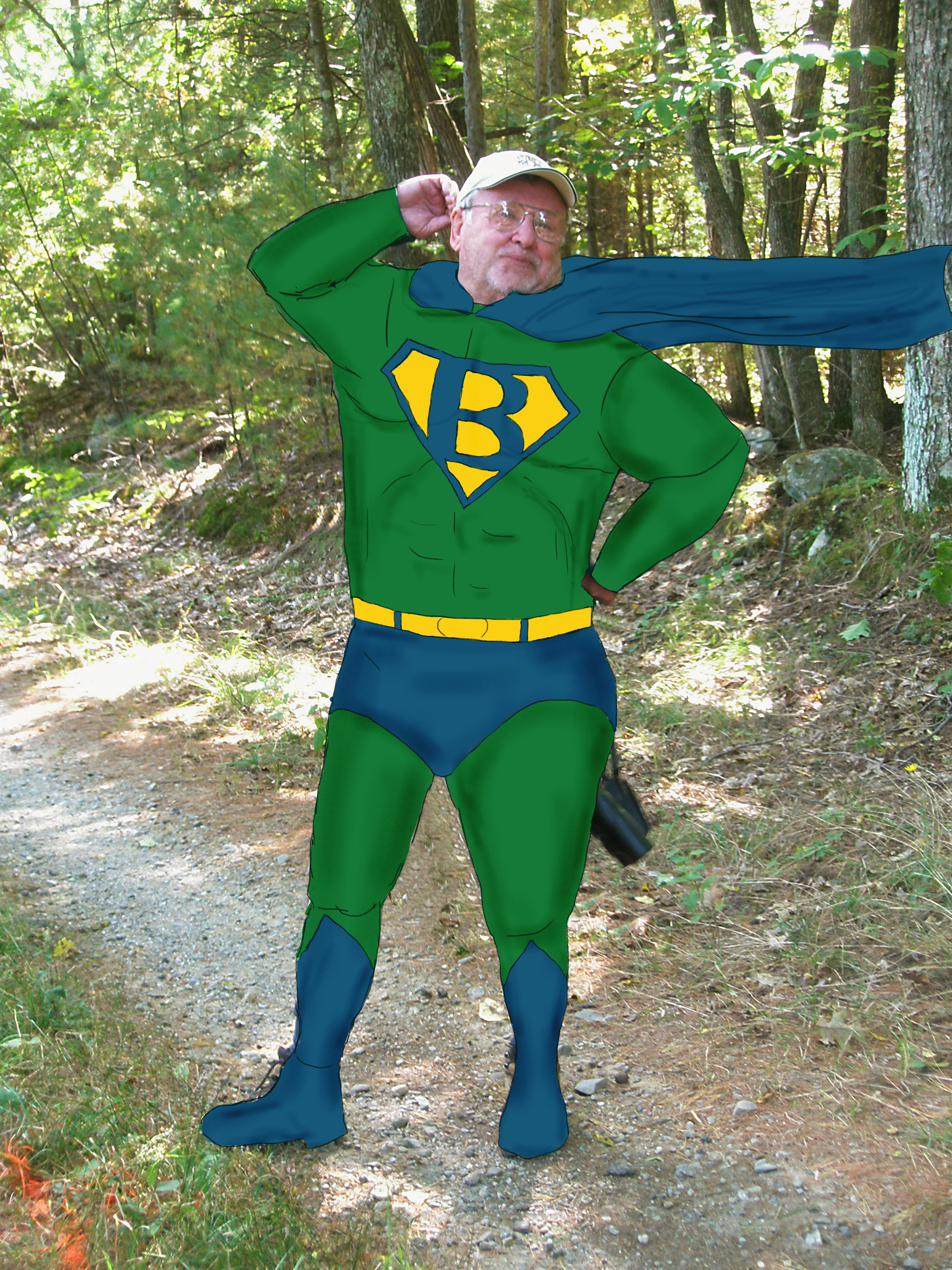
Paul had a Big Birthday™ this week, and Nancy wanted to express her appreciation to him. So she sent me a picture of him, and asked me to turn him into a super hero. And so, without further ado…

BirderMan

Faster than a peregrine falcon, able to spot small warblers in a single glance, able to find small birds in a big forest… It’s BirderMan!

Happy Birthday, Paul.

Seal Dive

I went on a seal dive today. With the weather we had, it didn’t start out well–swells were predicted, and as we were waiting to get on the boat, the heavens opened up and it started pour. After a half hour hold, the captain decided to take us to the Salvages, an outcropping of rocks off the coast of Rockport, rather than the Isle of Shoals off Portsmouth.

We got to the Salvages, and fortunately, the seas weren’t as choppy as predicted, though it did still rain off and on. As we anchored, we could see seals peeking at us from the water surrounding the  rocks.

For me, the first dive was frankly an abortion. I started off the dive with the back of my wetsuit open; all six of us were in the water together; I ended up following the wrong person, the three of us got separated from the dive leader, I led the other two in the wrong direction, and we were never able to reconnect, and all six of us ended up heading in the wrong direction, away from the seals. And the camera strobe stopped firing. Unfortunately, two of the divers had only brought a single tank.

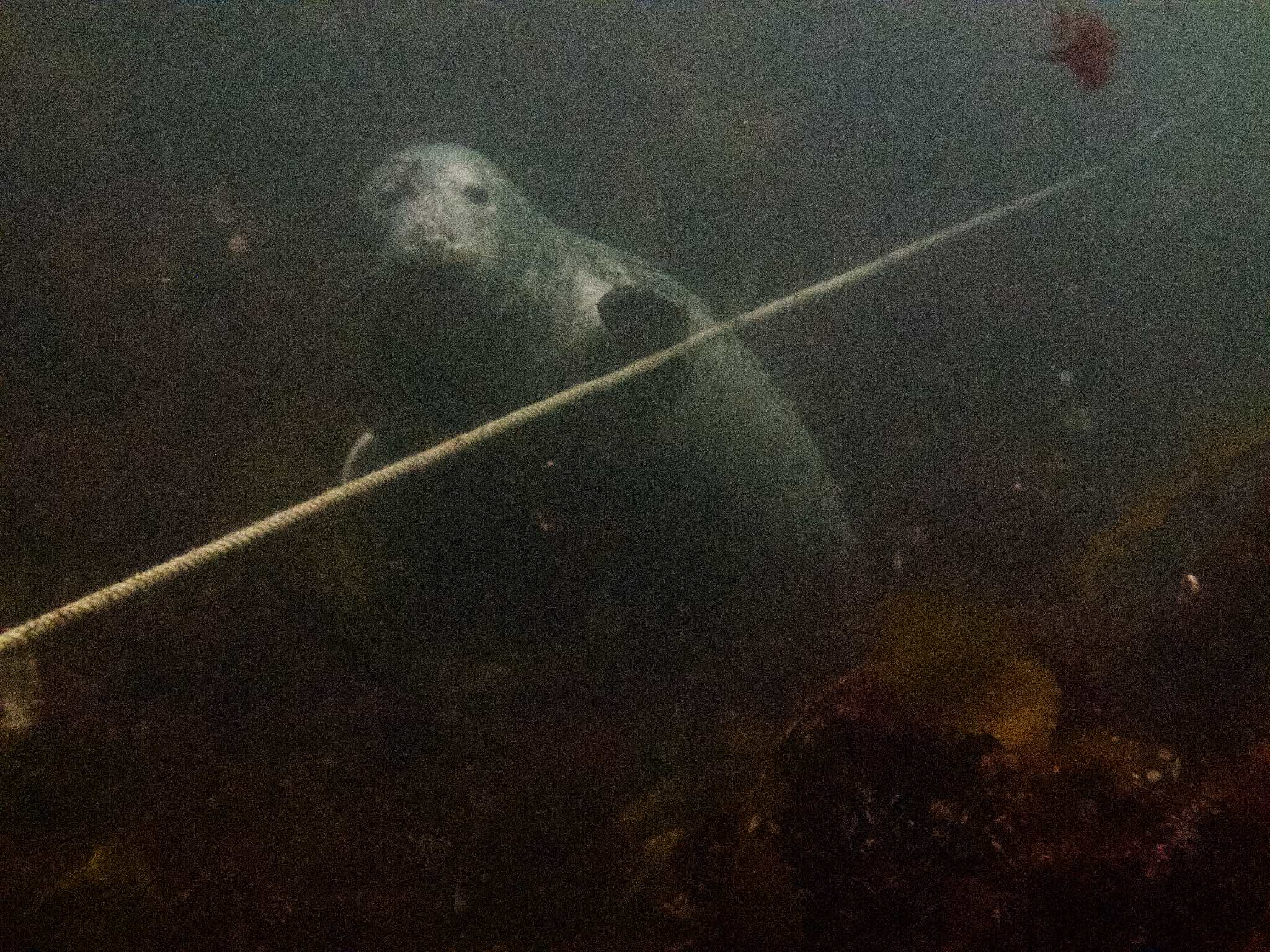
The second dive was better. The captain moved us a little closer to the rocks, and we went down the anchor line and just hung out there. With the strobe out of commission, I put the camera ISO as high as I could, put it back in program mode, and shot with existing light. Eventually a seal showed up, and watched us from a lobster trap line:
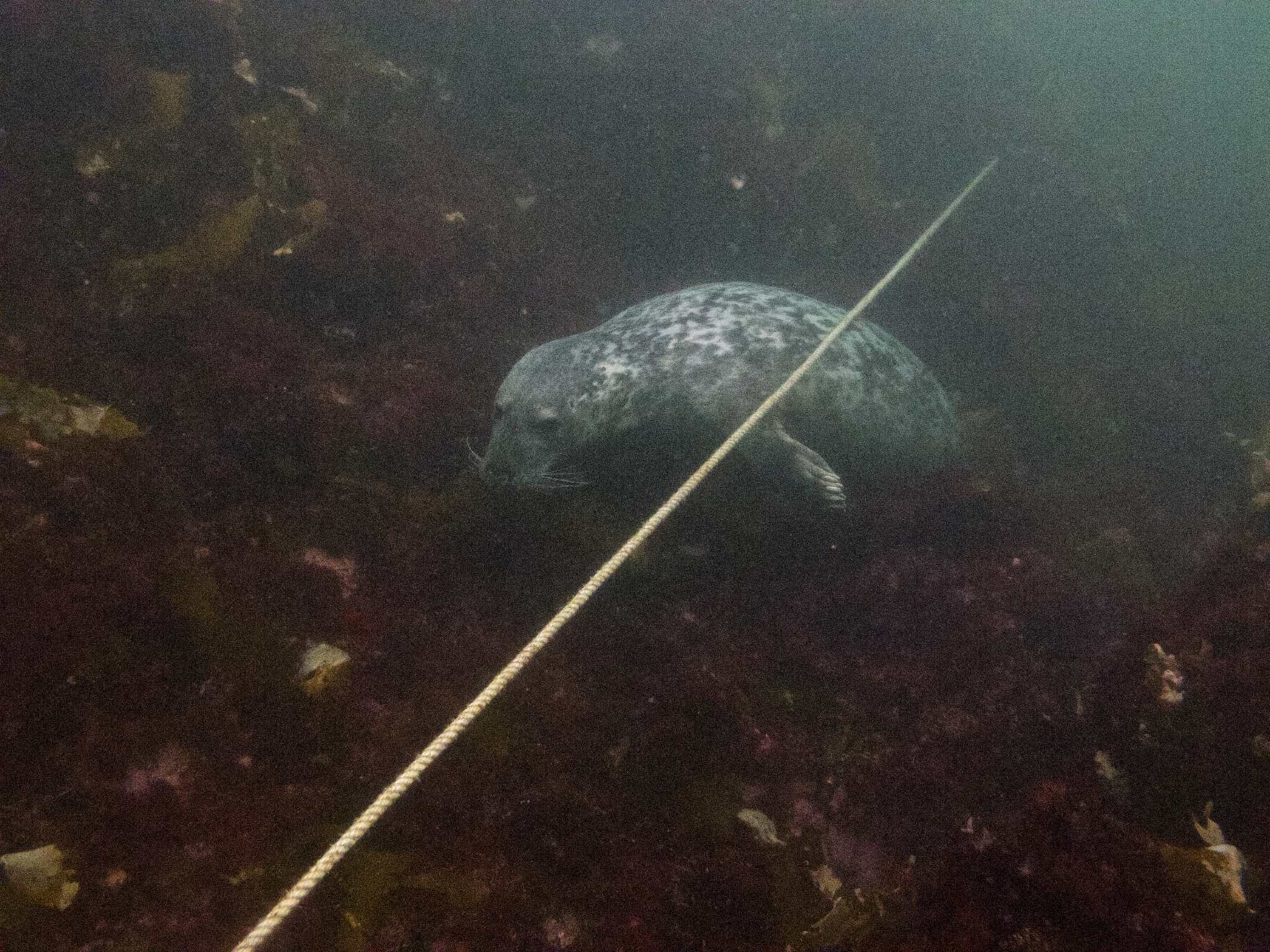
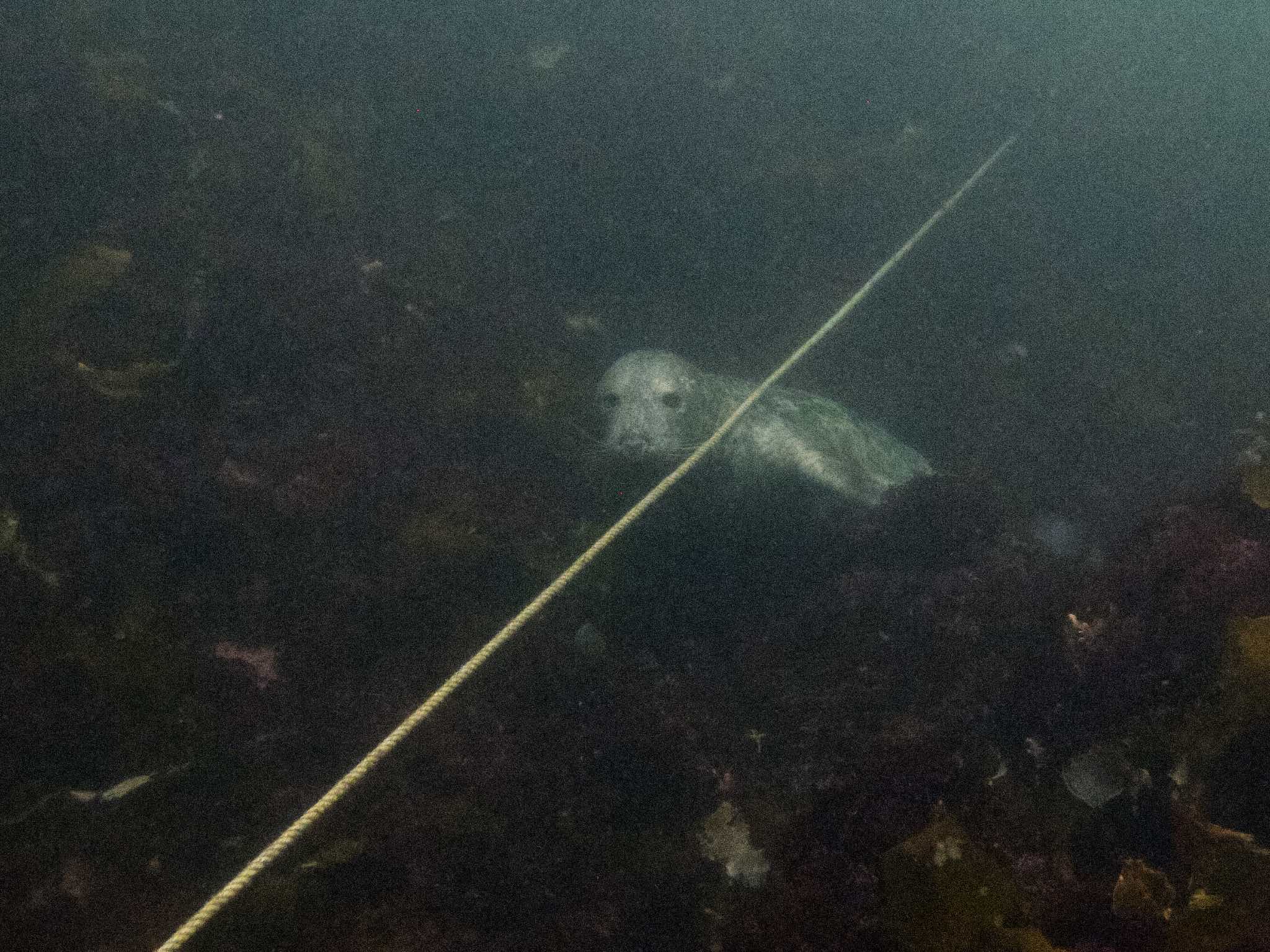
Seal by the lobster line Seal by the lobster line Seal by the lobster line


New(er) Car

I picked up a new car on Saturday. Actually, “newer” is a better description, since it’s a used car, a 2010 Honda Element. To understand why, we need to go back nearly 10 years.

I remember thinking the first time I saw an Element on the road, that it was a truly funny looking vehicle.  (I later read a remark that the chemical name for the Element is “Buttuglium”). It’s tall and boxy, and well… funny looking. Continue reading

Nahanton Downstream

Gallery

This gallery contains 3 photos.

Sunday, I paddled downstream from Charles River and Canoe and Kayak’s Nanhanton Park location. Unlike the upstream side, which runs about 14 miles, this is about a two mile trip before you have to stop just short of the Silk Mill Dam. The river is narrower, and the trees crowd the river, providing lots of shade. There are many more human structures nearby, starting with the radio towers looming in the distance. Continue reading