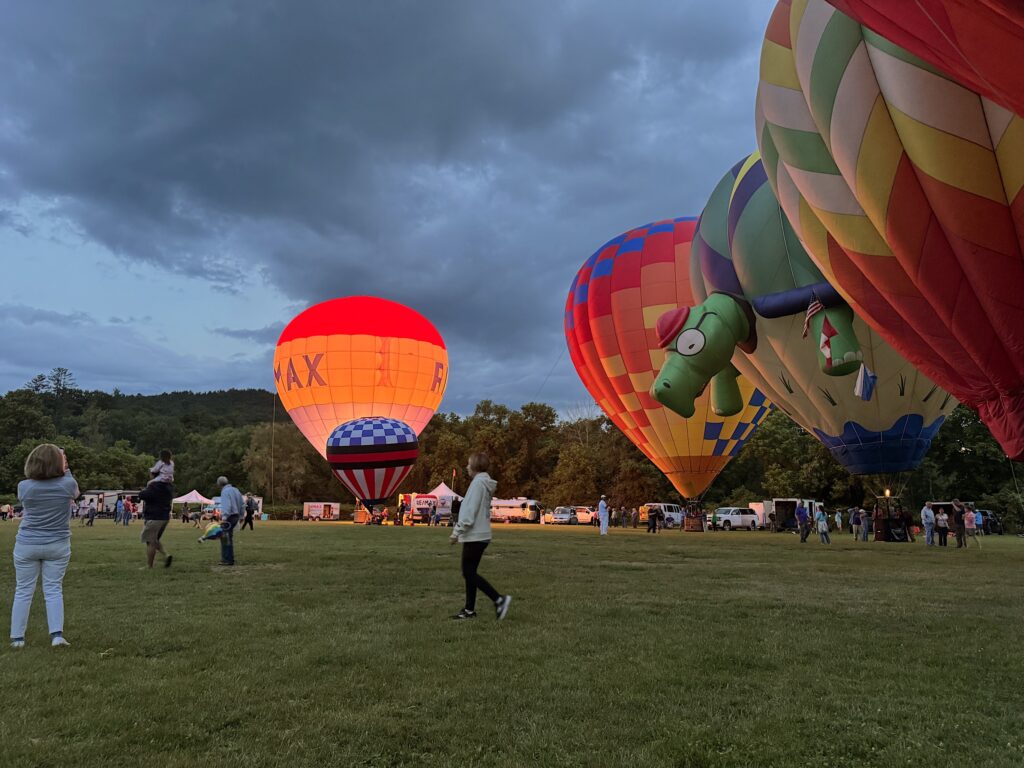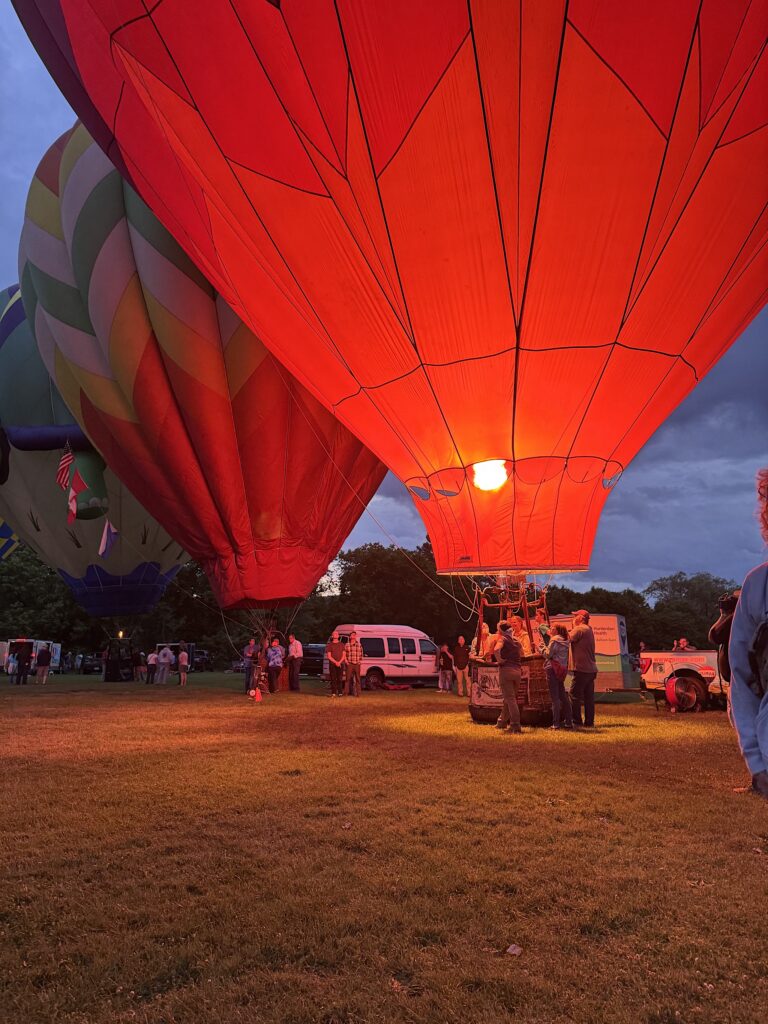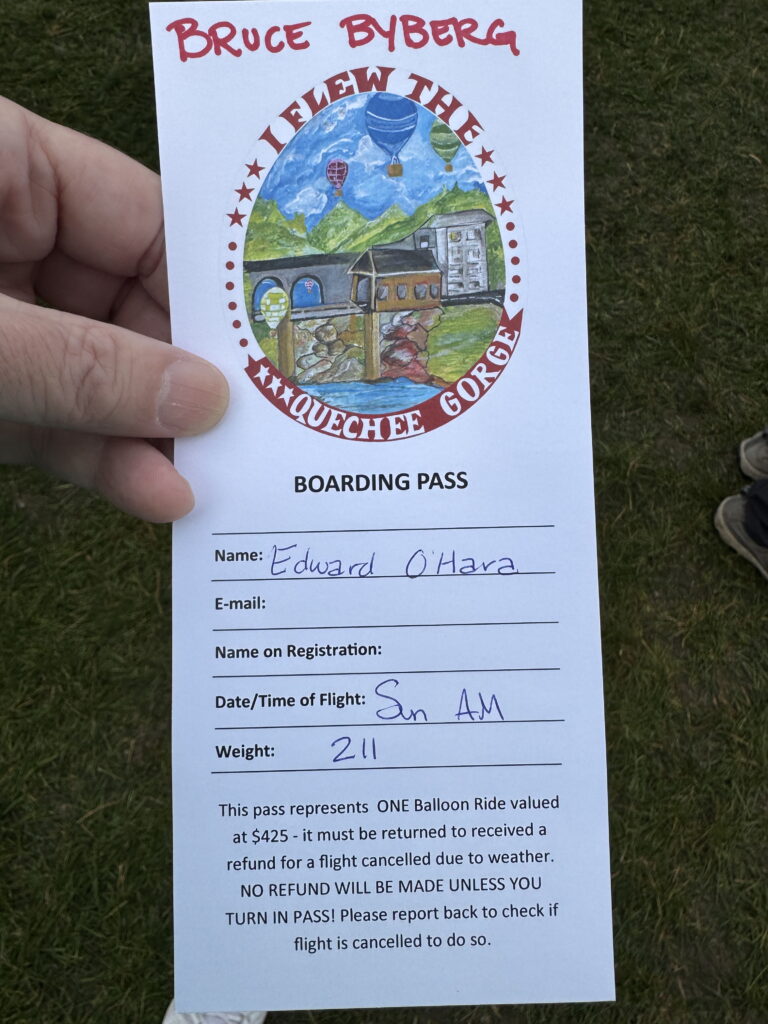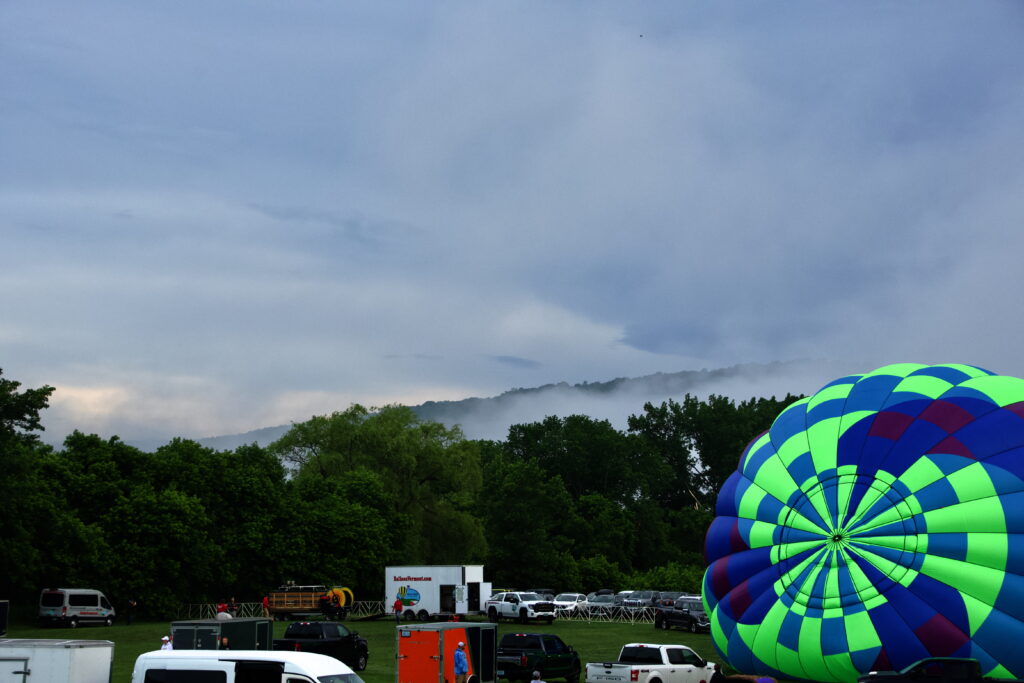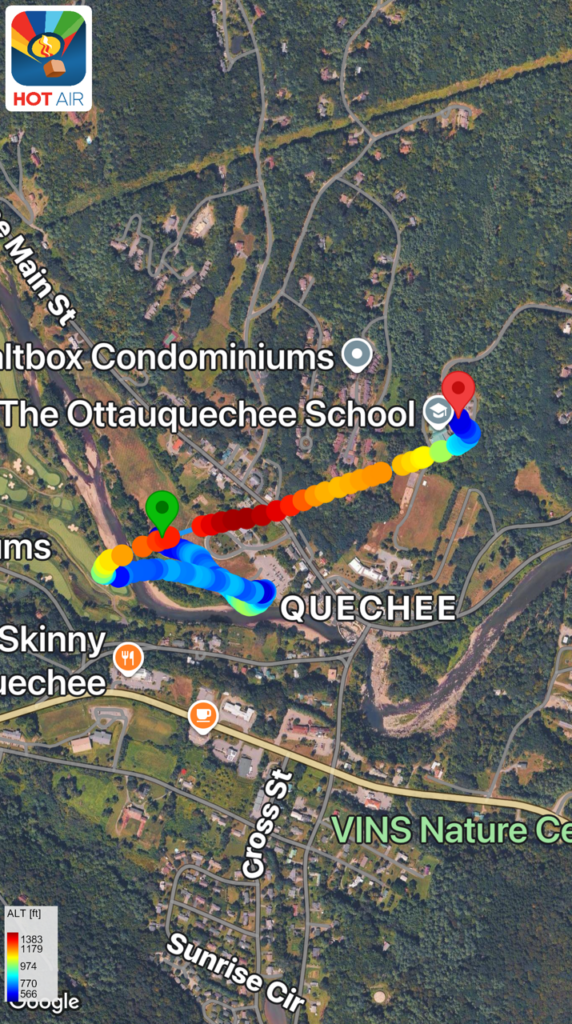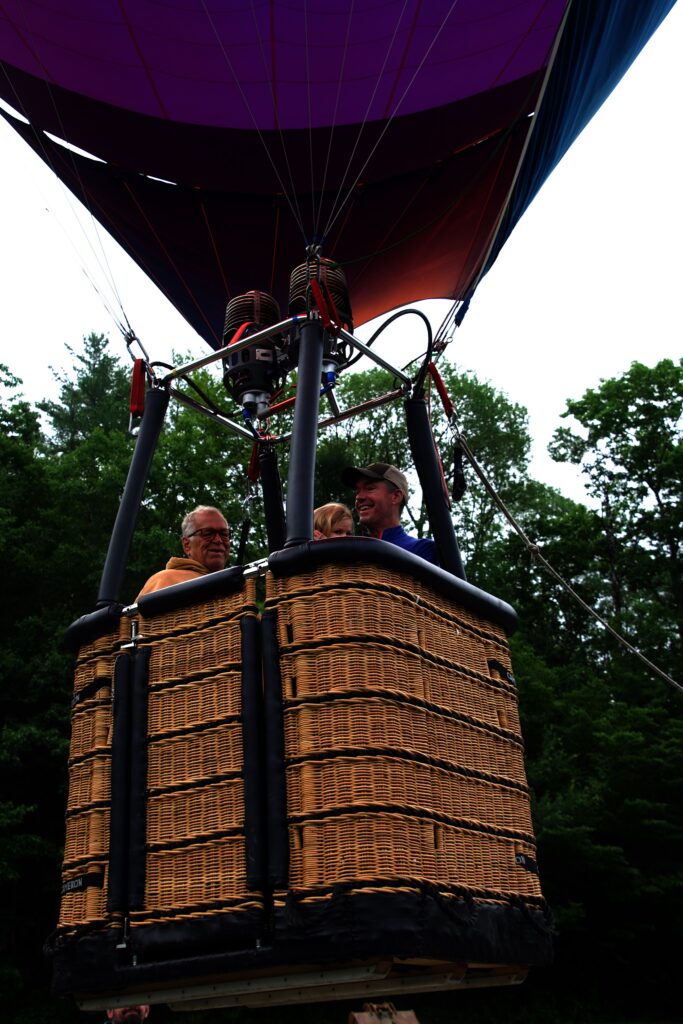
I took a three day trip back to the White Mountains last week to see the fall foliage. Up until now, I’ve always done the trip on the motorcycle, but I’ve been dealing with really bad heartburn and felt that my motorcycle’s riding position would just exacerbate it, so I decided to just drive up. I was also mildly curious to see whether the trip would be as enjoyable in the car as on the bike.
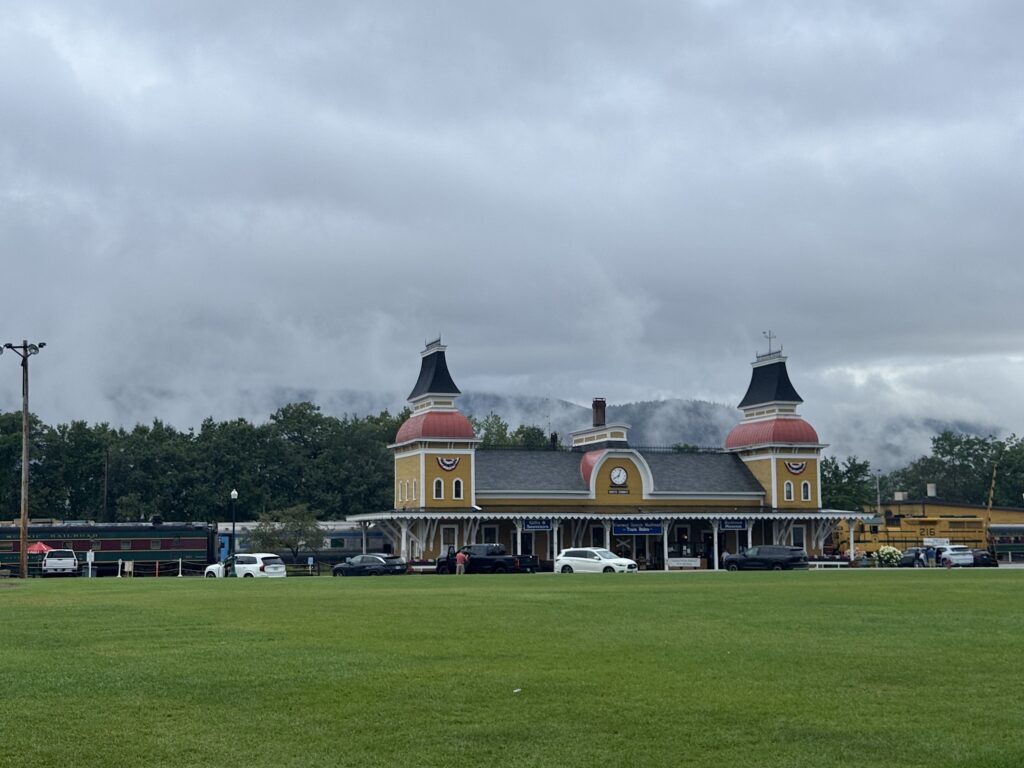
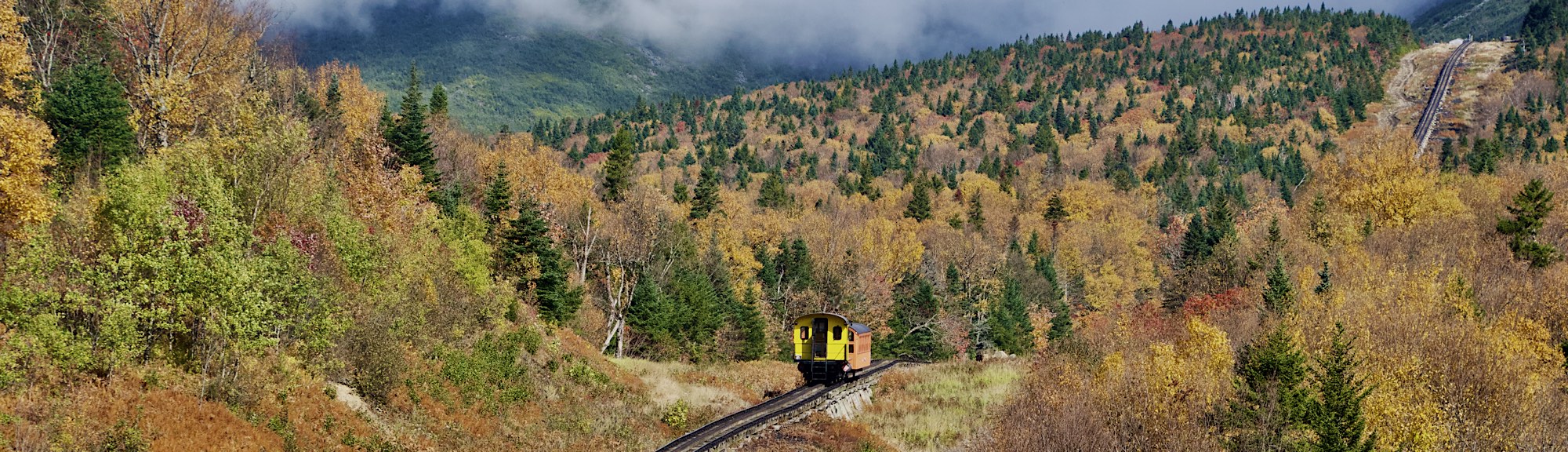
I’d hoped to book another trip on the Conway Scenic Railway, but they didn’t have any trips available. I was able to book a ride on the Mount Washington Cog Railway — and this time, I knew which side of the train was the good one. In fact, I was able to get a seat in the front row looking out for the trip up.
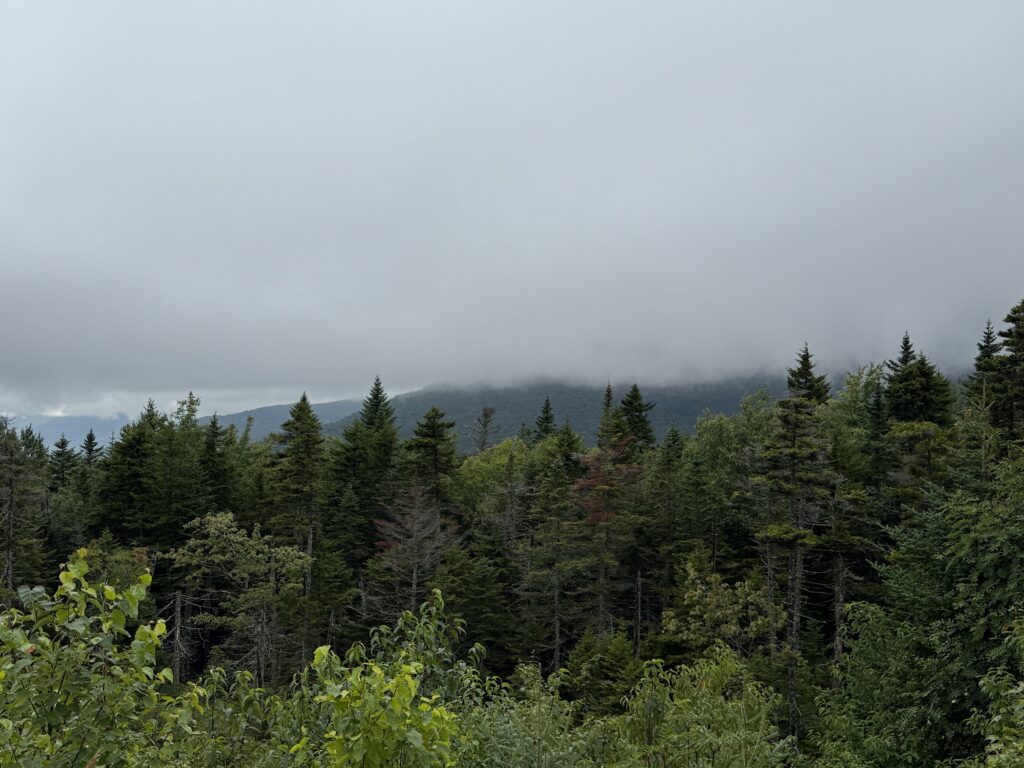
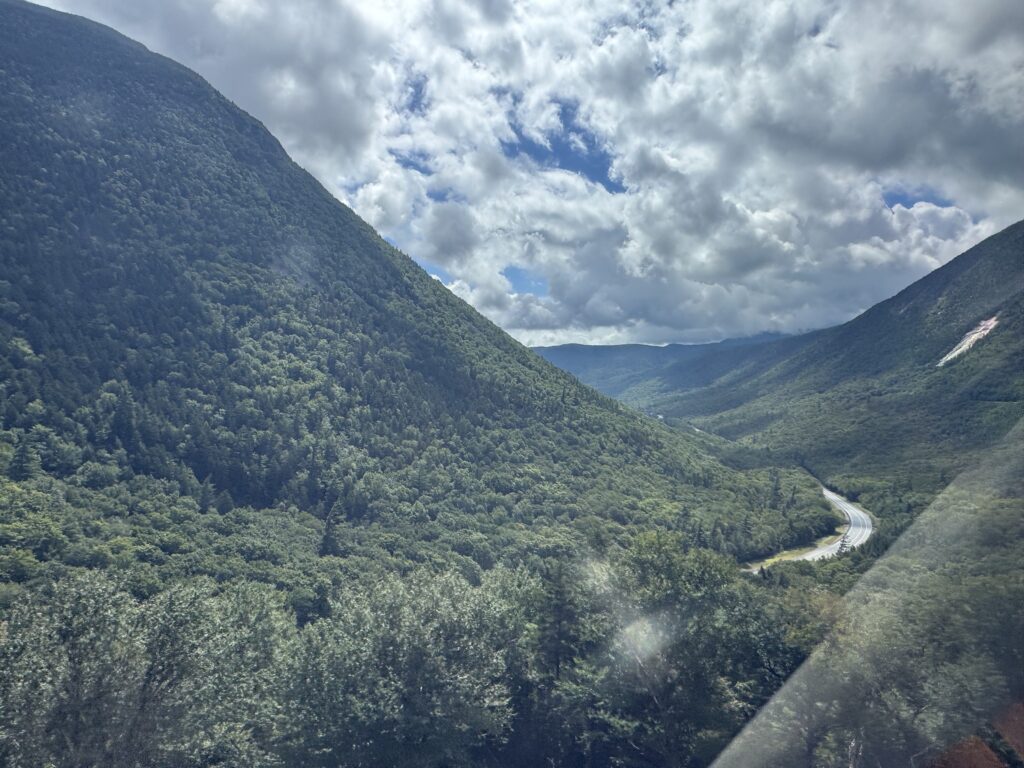
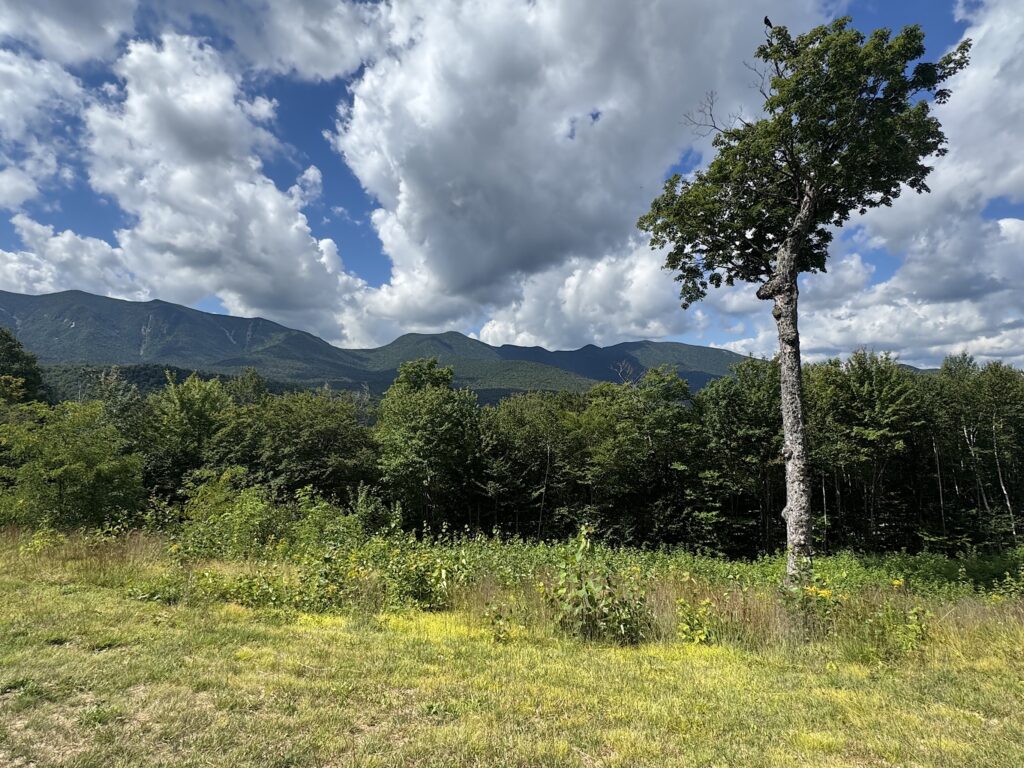
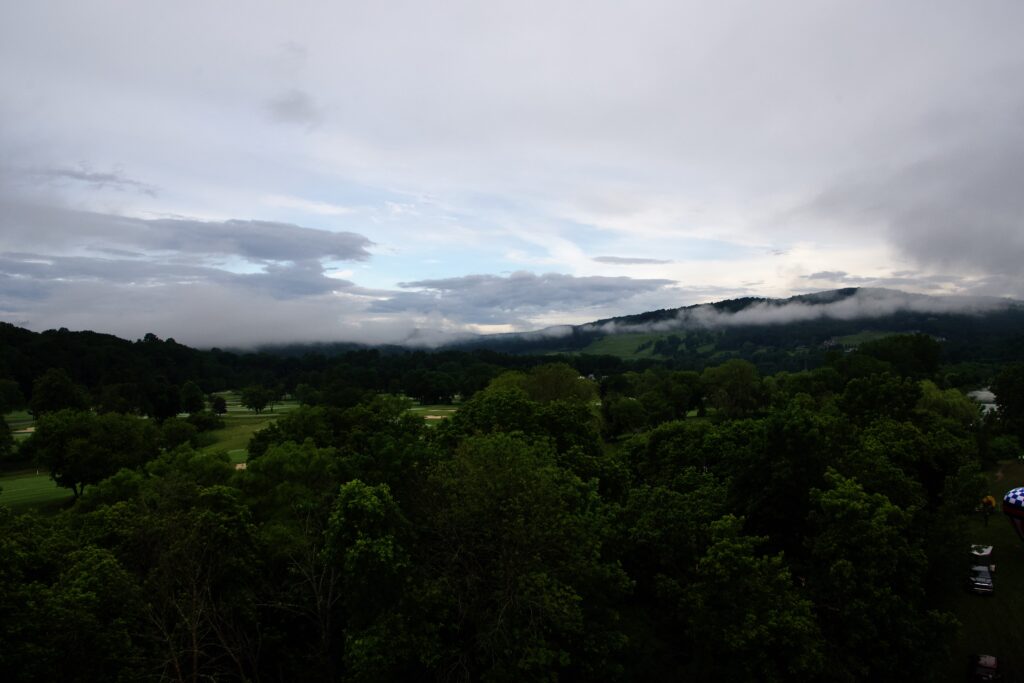
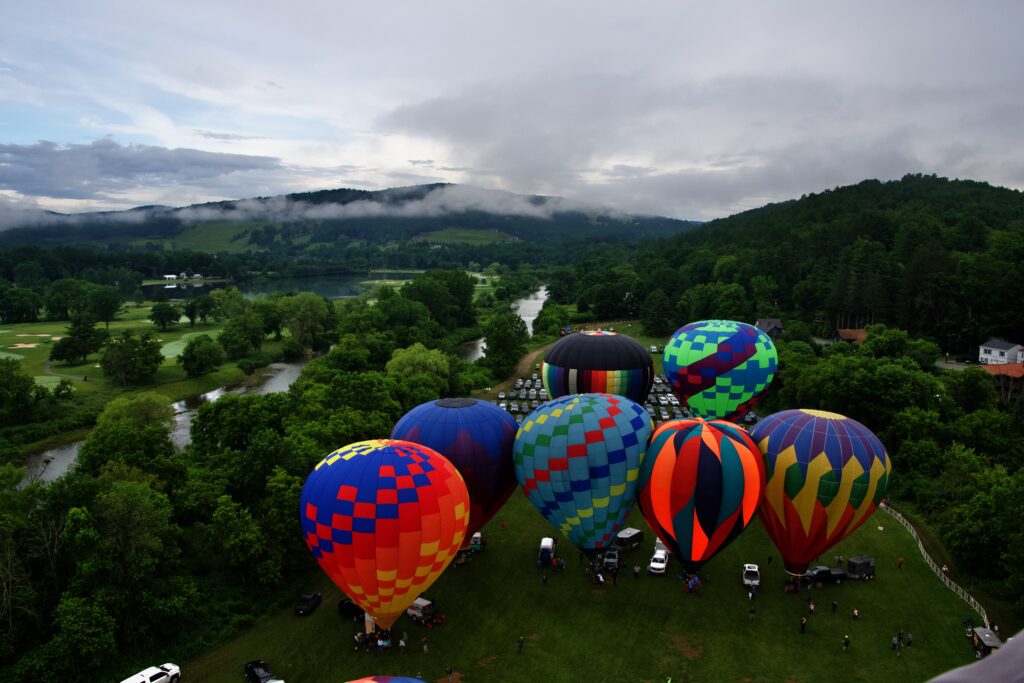
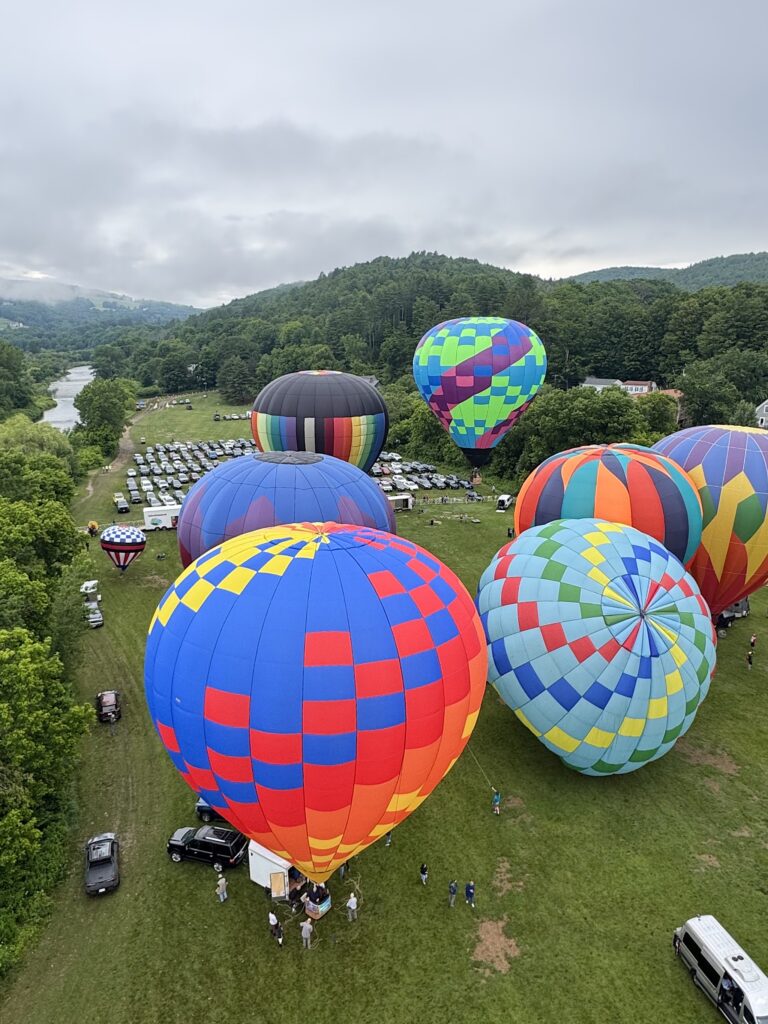
In terms of foliage, the timing was absolutely perfect; I was in the middle of peak foliage. Unfortunately I was dodging the clouds all three days — sometimes it was completely overcast, muting the colors of the foliage, other times there was partial sun, and other times, the sun was out, bringing out the full brilliance of the yellows, oranges and reds of the leaves.
I spent most of Wednesday getting up there. I like to get off I-93 and onto Route 3 somewhere around Plymouth; the road is scenic, but not overcrowded and you can make decent time while still enjoying the scenery. I followed 3 to Route 112, the Kancamancus Highway.
I’ve never seen the Kanc this crowded. I went up on a Wednesday to avoid the weekend traffic, but apparently everyone else had the same idea. All the scenic overlooks were overflowing with parked cars. Then I reached Bear Notch Road, figuring it would be less crowded, and that I would be able to head directly to Bartlett and check into Attitash before dealing with North Conway traffic for dinner.
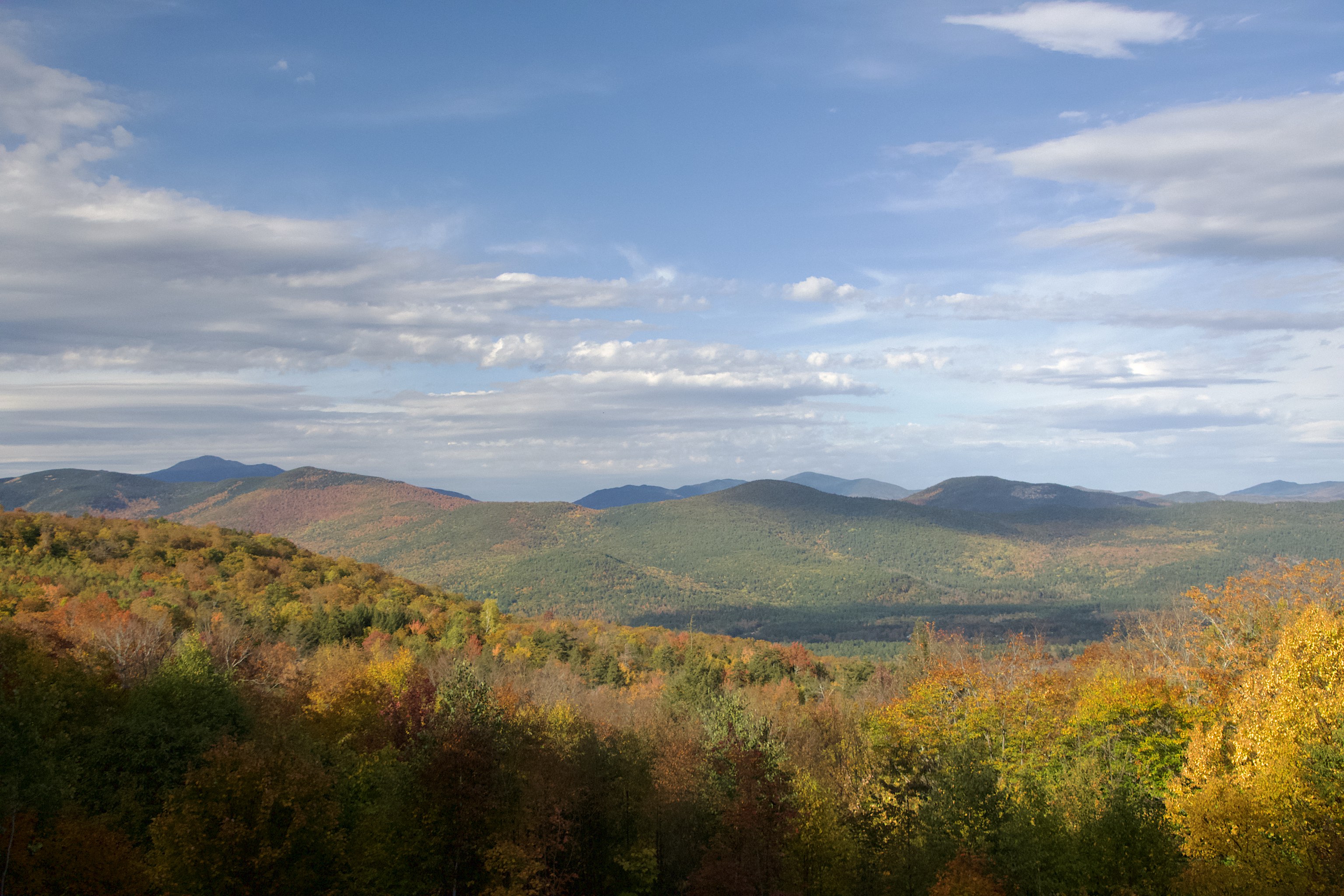
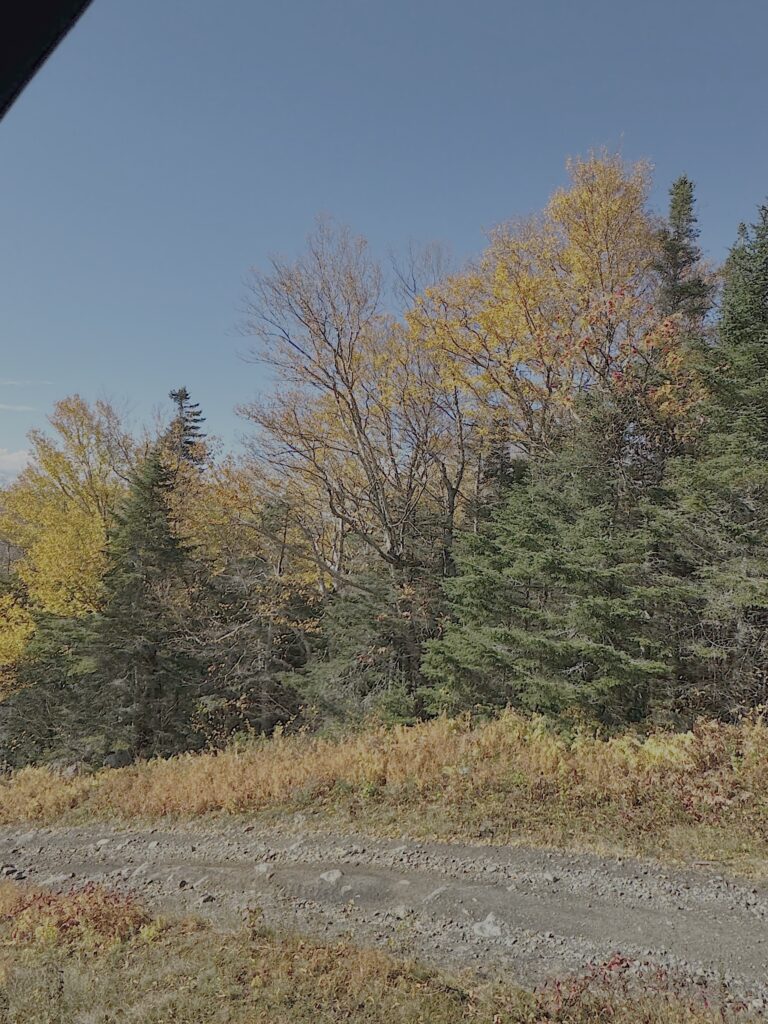
Fortunately, at the same time I pulled onto Bear Notch Road, the clouds started to part. I stopped in a couple of places for pictures.
Thursday, I had my trip to the top of Mount Washington on the Cog Railway. Dating back to the nineteenth century, for the longest time, service was run using steam locomotives with tilted boilers, but nowadays, most of the service is run with biodiesel locomotives, with steam runs relegated to special trips to Waumbek Station partway up the mountain.
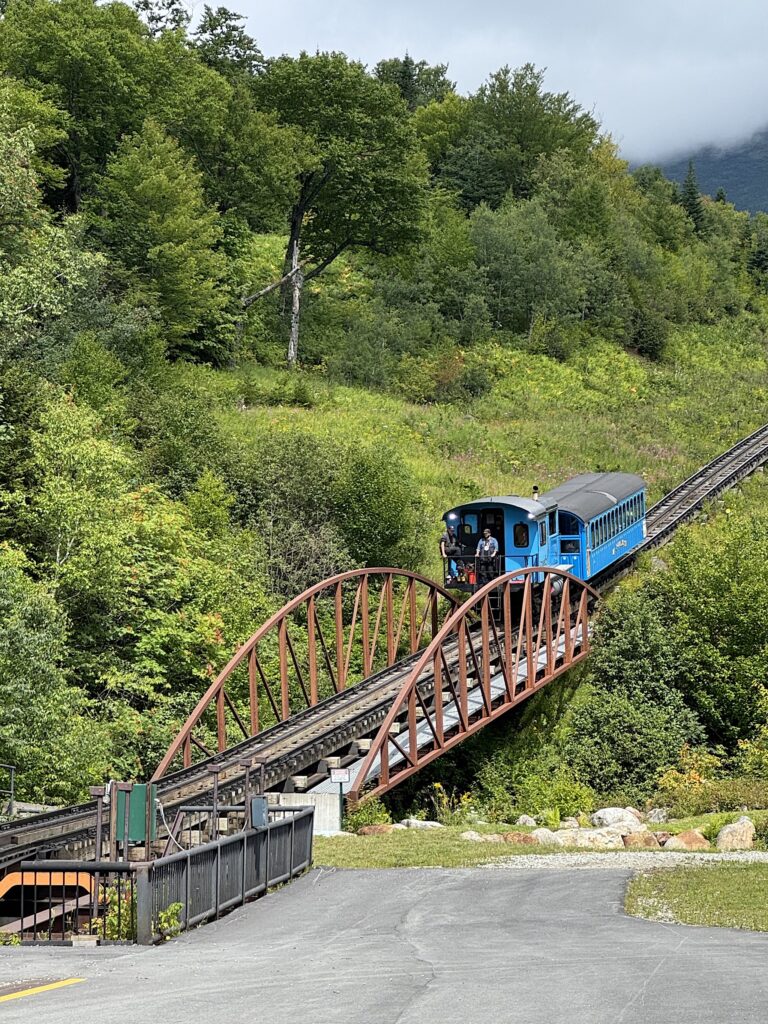
Unlike normal train tracks, the Cog has a central “rack” between the running rail, that a cog on the bottom of the locomotive engages with. This enables the train to climb the steep inclines.
This day, because it was peak foliage season, they were running trips in sets of threes. There were three consists of a single passenger car, each pushed by a biodiesel locomotive; between the biodiesel trip, steam locomotive Waumbek ran a special trip part way up the mountain.
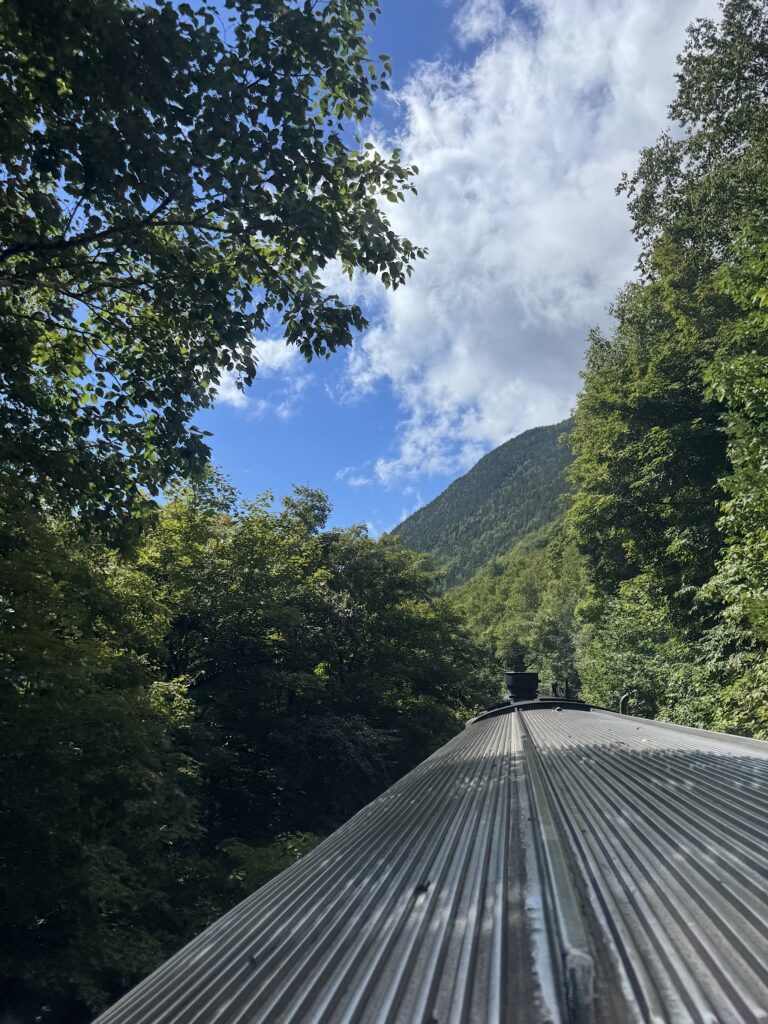
I was in the third train of our triplet for the trip up. After August’s trip, I knew the left side was better, and was lucky enough to get a window seat in the very first row. This meant I could see out the front and watch the trains ahead of us climbing.
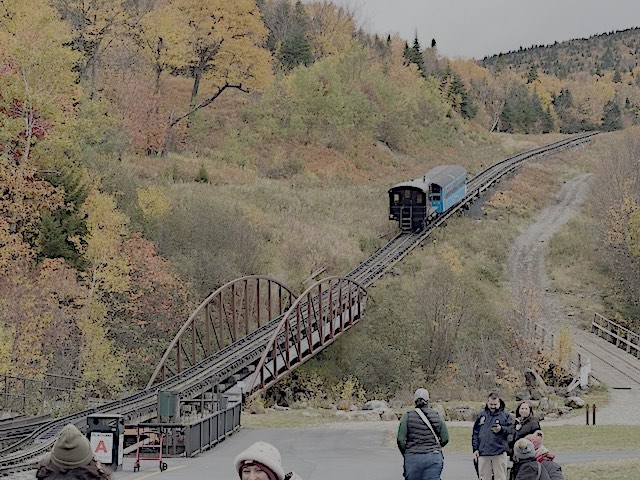
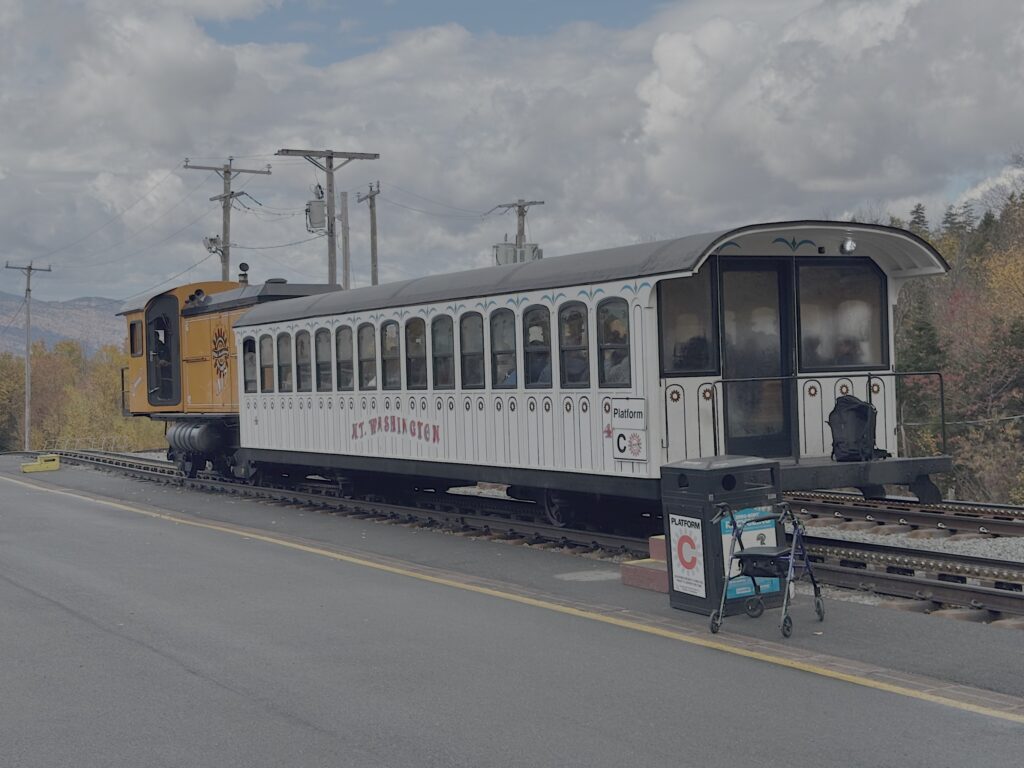
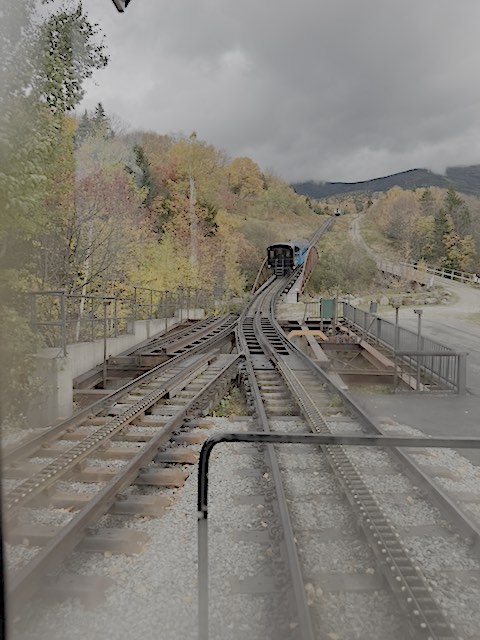
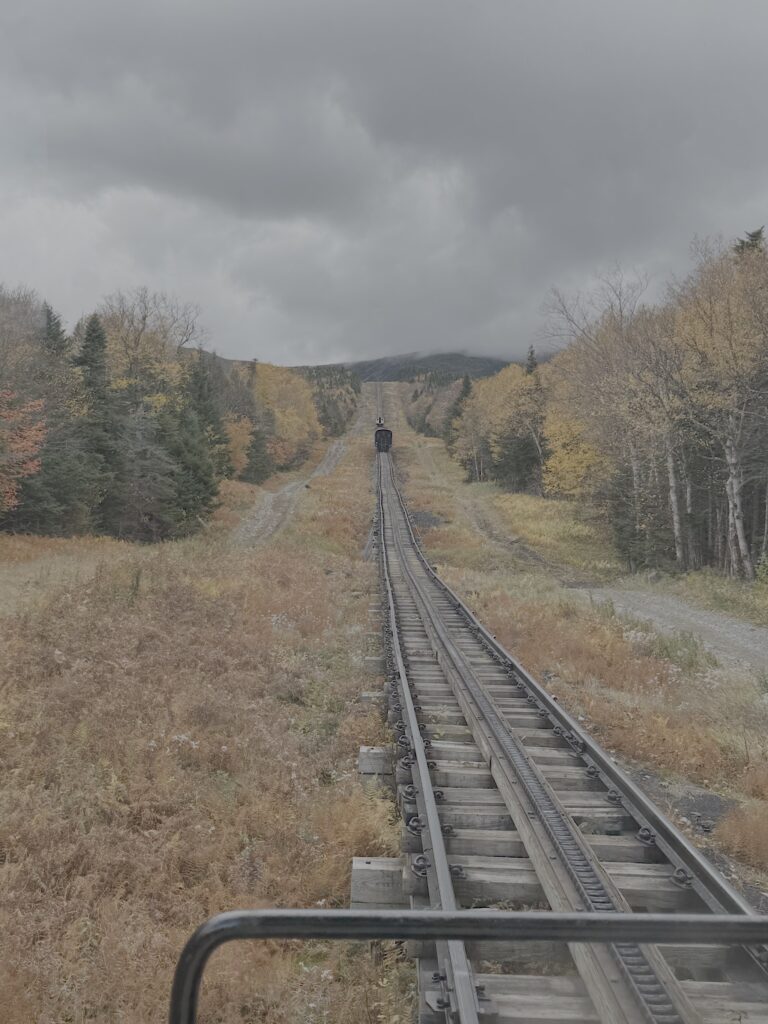
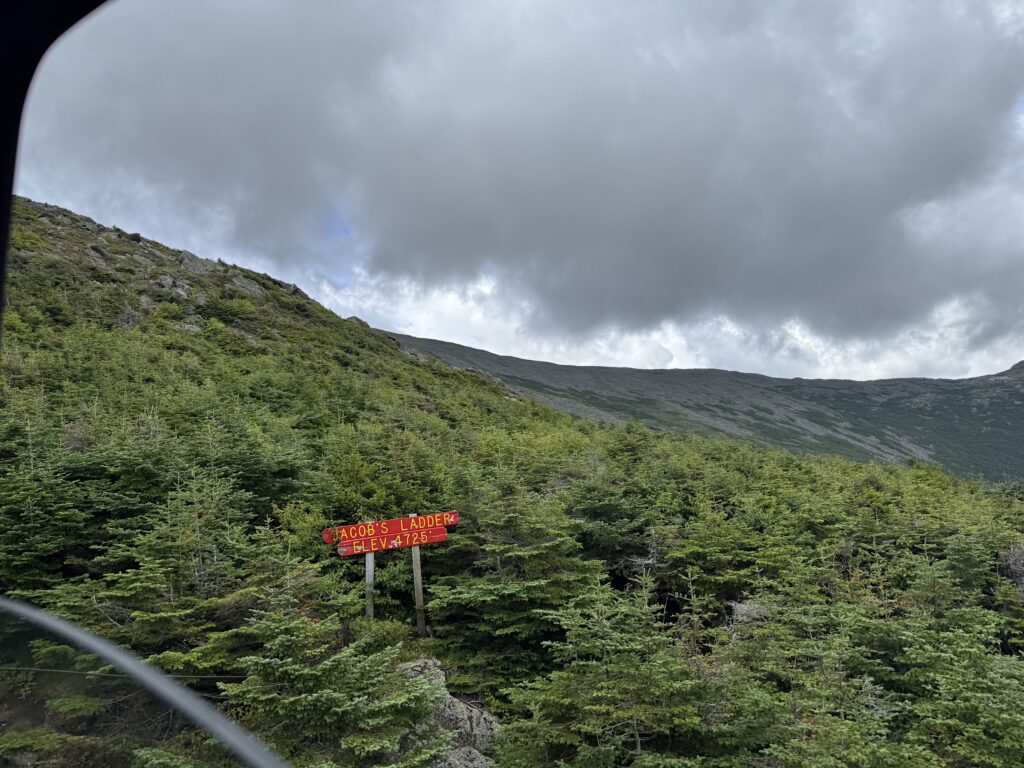
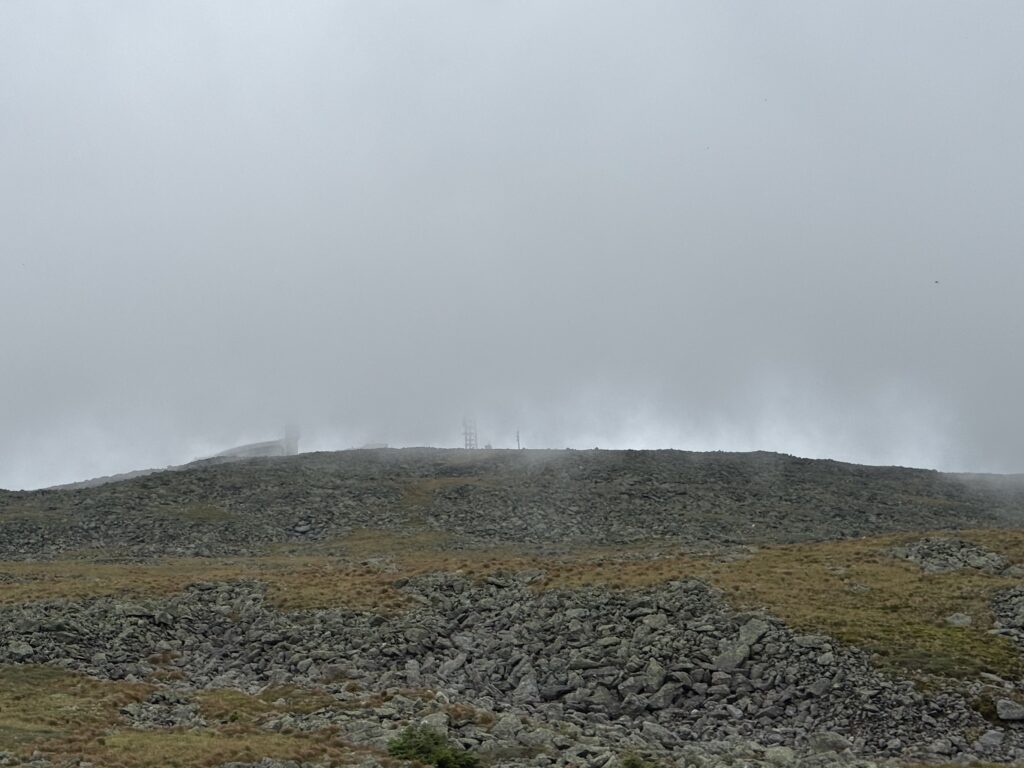
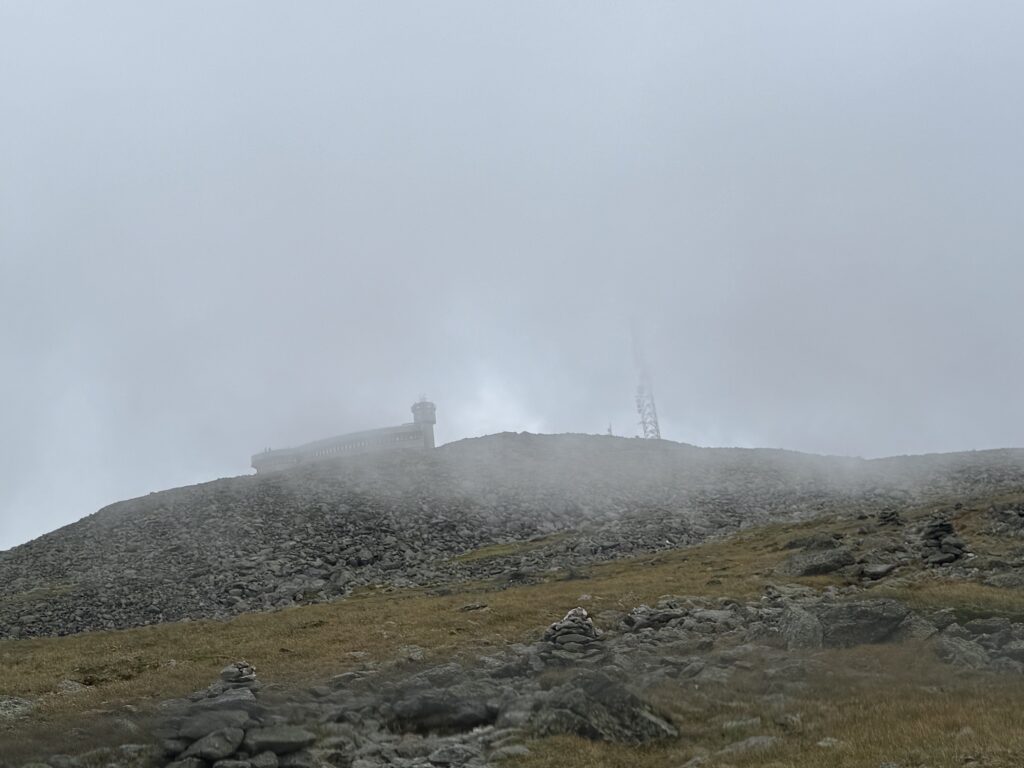
At the base station, it was warm, in the high sixties, with fall foliage all around, as we climbed, we rose into an evergreen zone, and from there into an alpine tundra zone, where only small very hardy plants grew. When we reached the top, we were in the clouds (which felt like fog), the wind was howling, and it was freezing.
The incline is so steep — just over 37° — that it plays tricks on your perception. There is a small shack at the halfway point, that looks tilted crazily — but is actually built level.
We got to the summit at around 12:40, and had an hour to spend there, being admonished emphatically not lose sight of the visitor center and to be sure not to miss our train for the trip back. During that hour, I had a look at the observatory museum, the Tip Top house, the actual summit, and experienced heavy clouds, howling winds, about two minutes of clarity when the clouds parted and you could see to Vermont and Canada, snow, about 30 seconds of rainbow, and then heavy fog again, before the next set of trains arrived to take us back to the base.
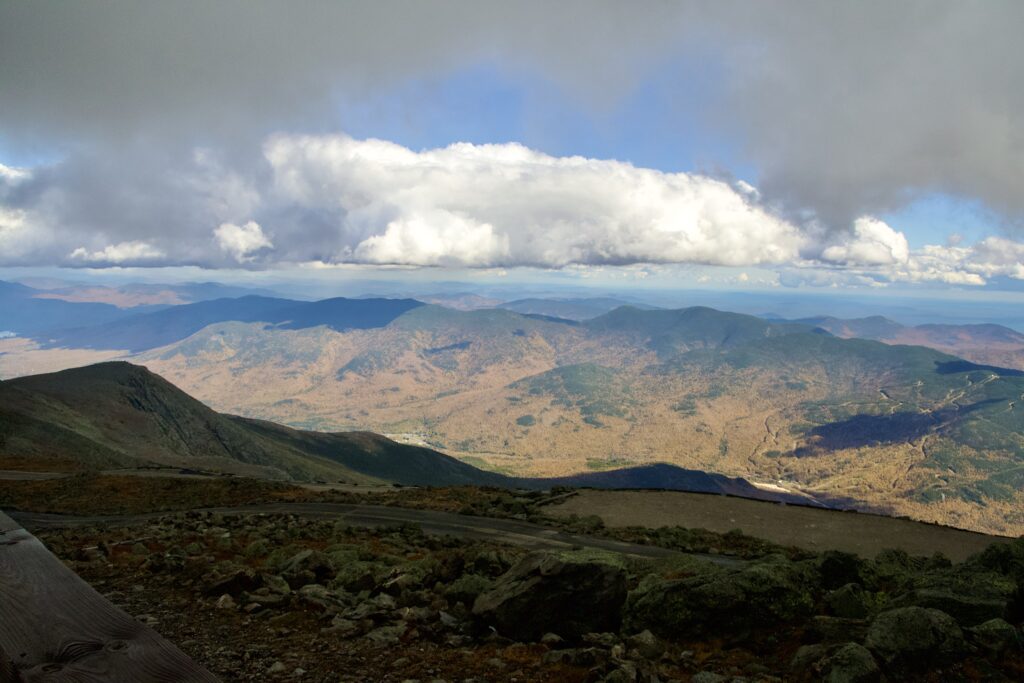
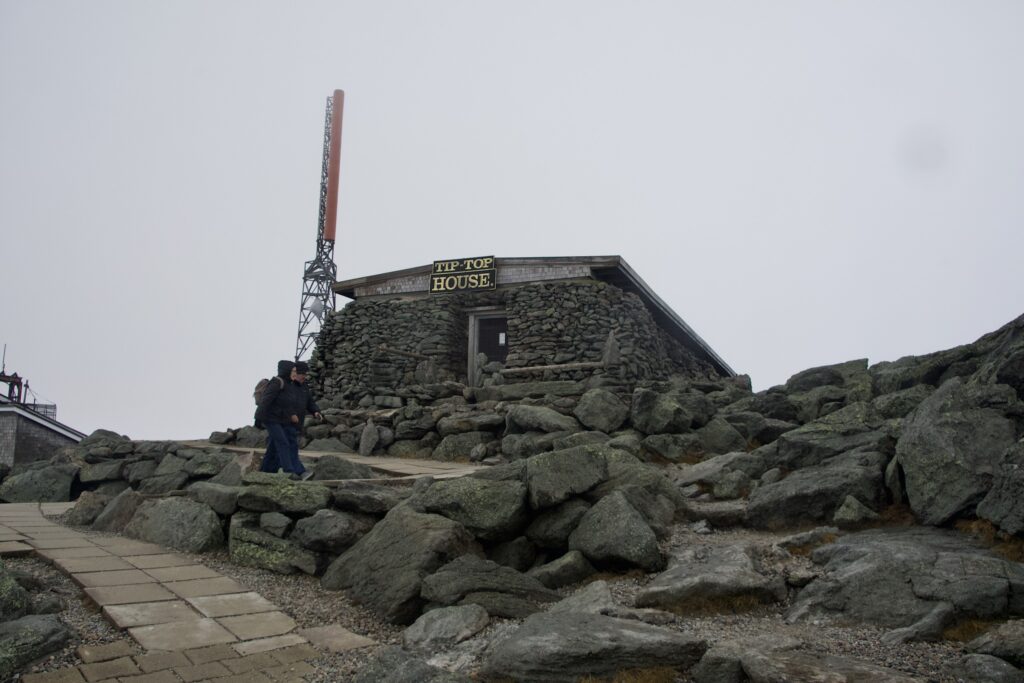
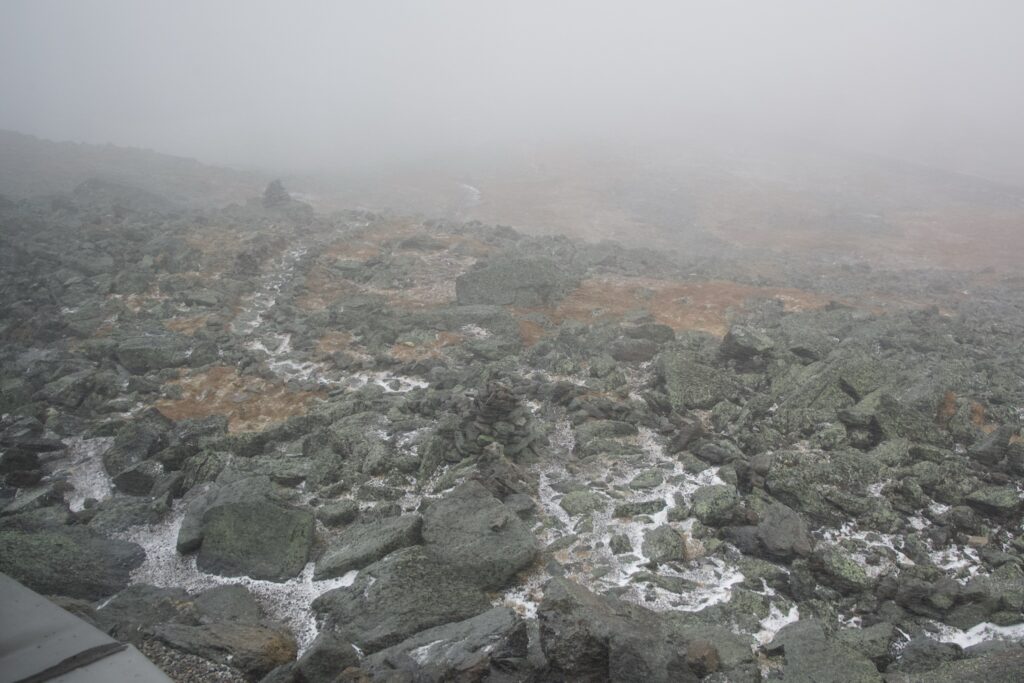
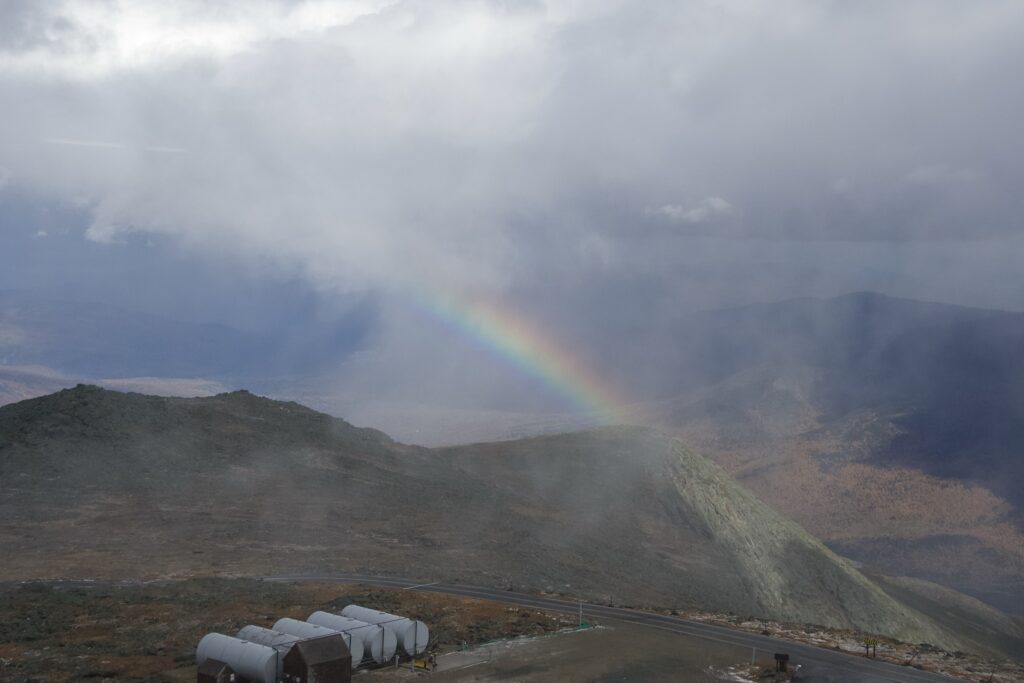
The trip to the base station was a bit faster than the trip up. Once we were out of the alpine zone, we were back in the sun, and could see some foliage.
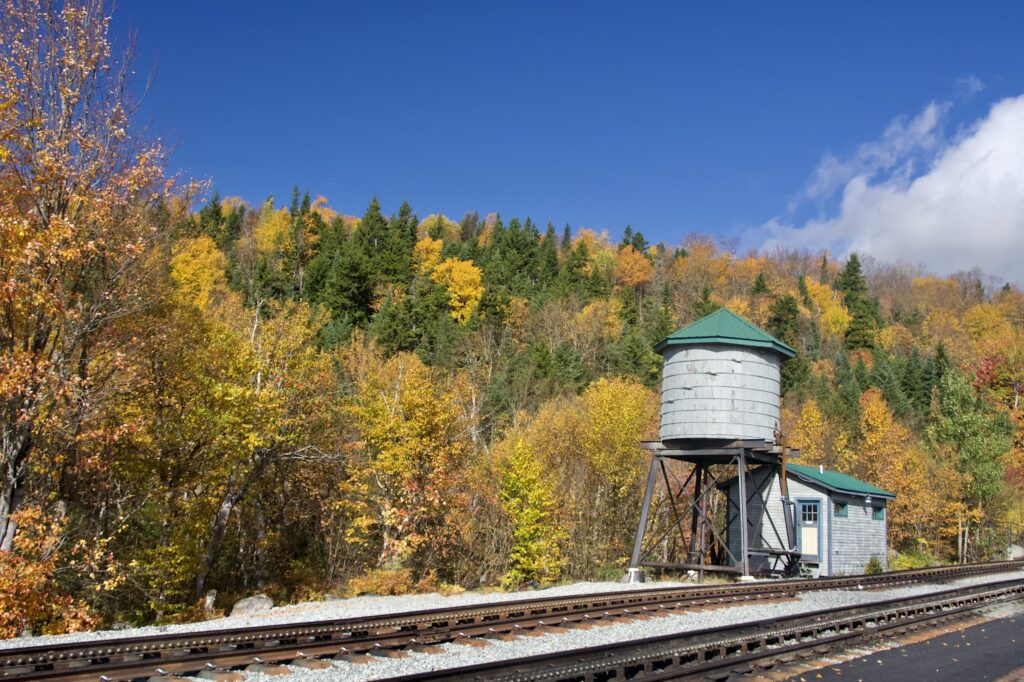
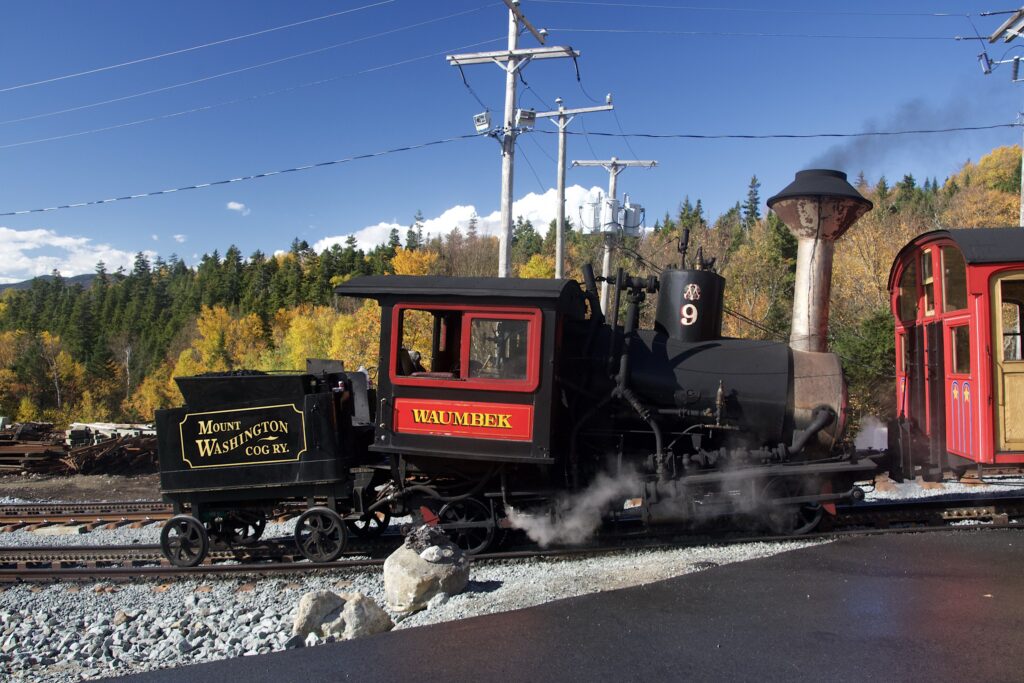
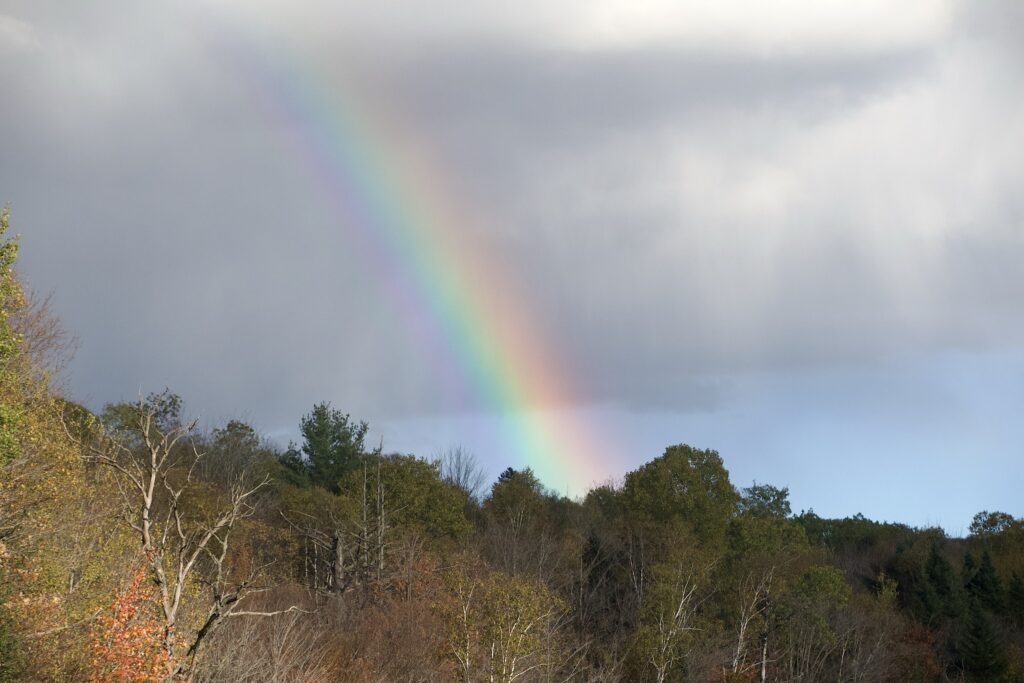
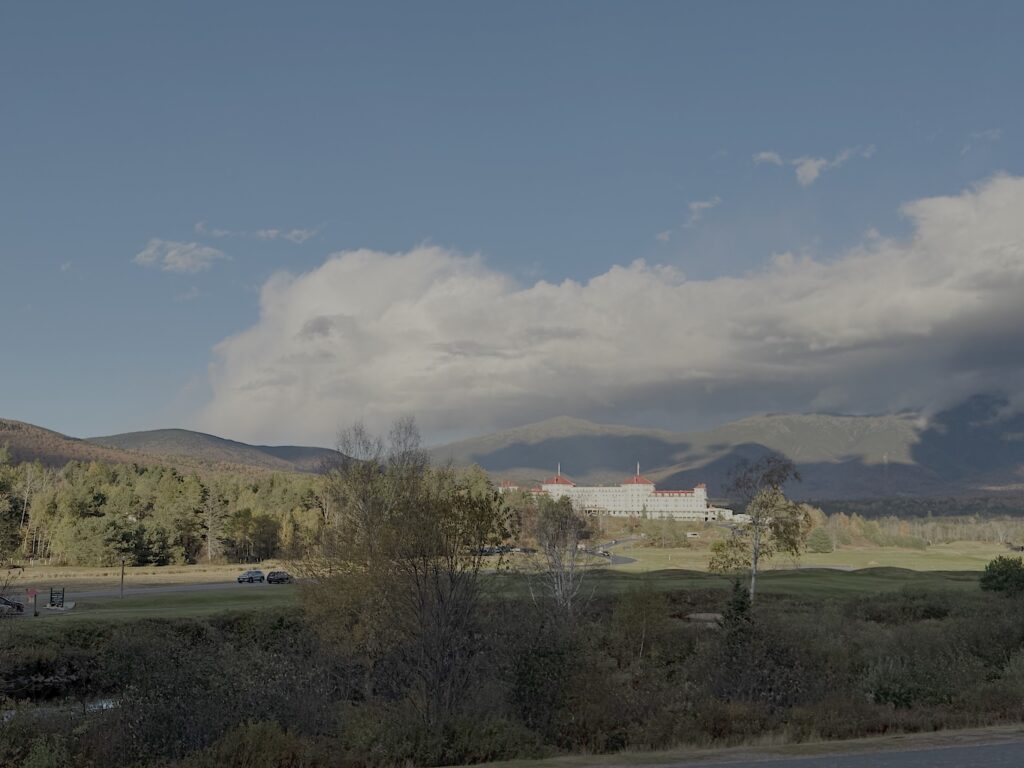
We arrived back at the base station around 3. I took a quick run down to Crawford Notch hoping to see the Mountaineer pulling into the station. The conductor on the trip down had mentioned that Littleton to the north was a cool place to visit, so I drove up there and took a quick walk along its Main Street. On the way back, I was treated to another rainbow, and then a spectacular view of the Mount Washington Hotel with dramatic clouds wreathing the Presidential Range.
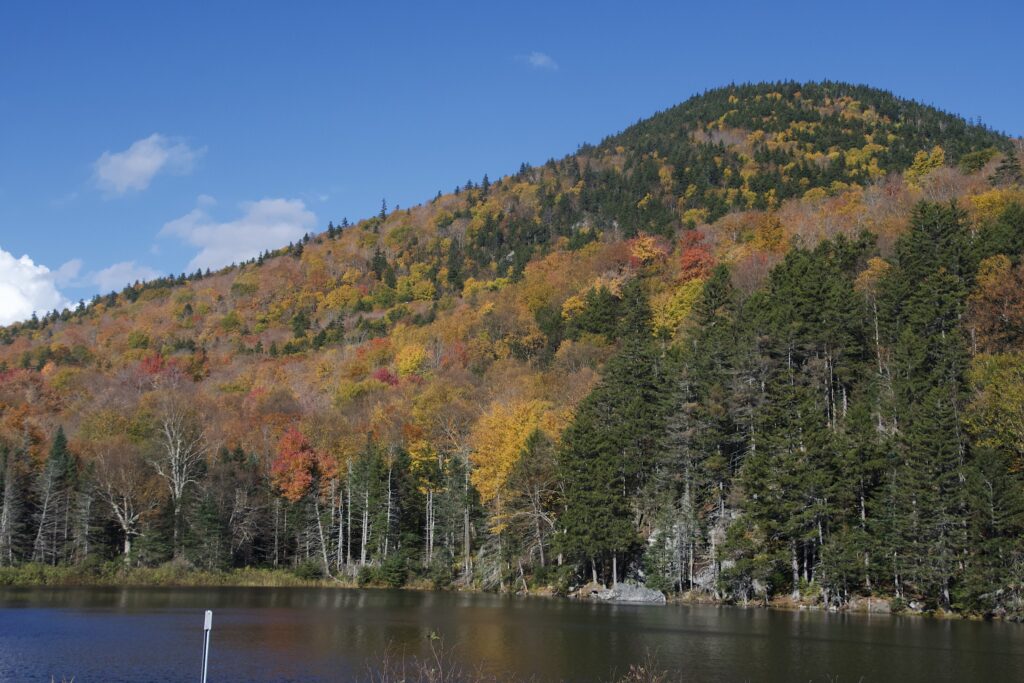
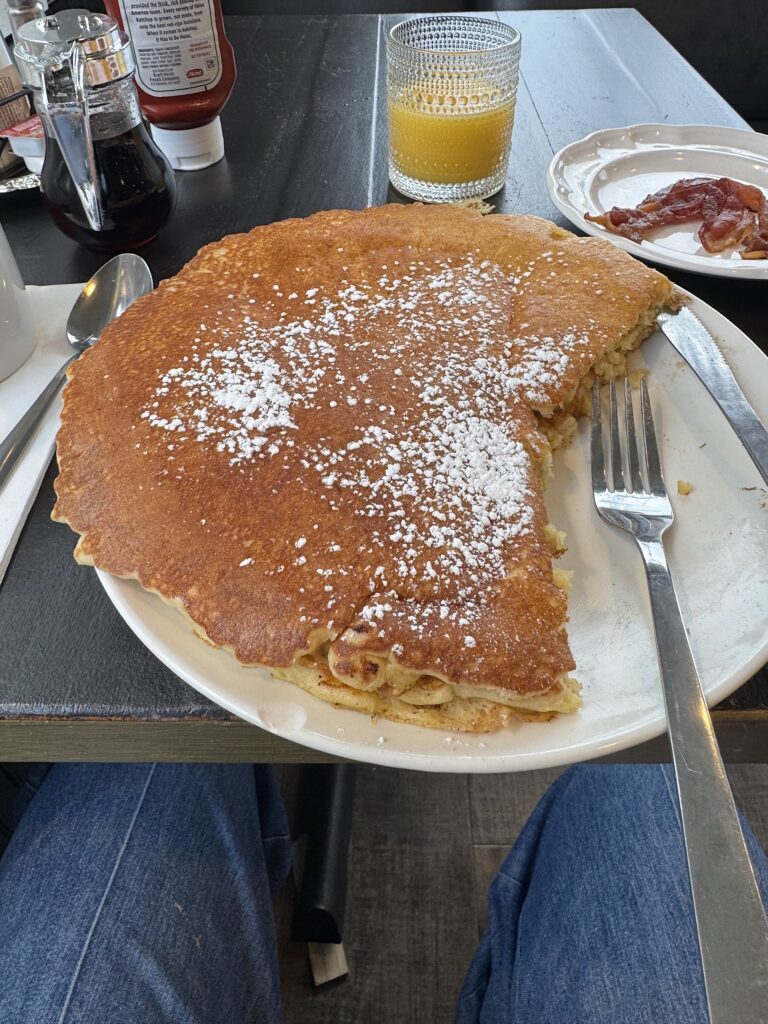
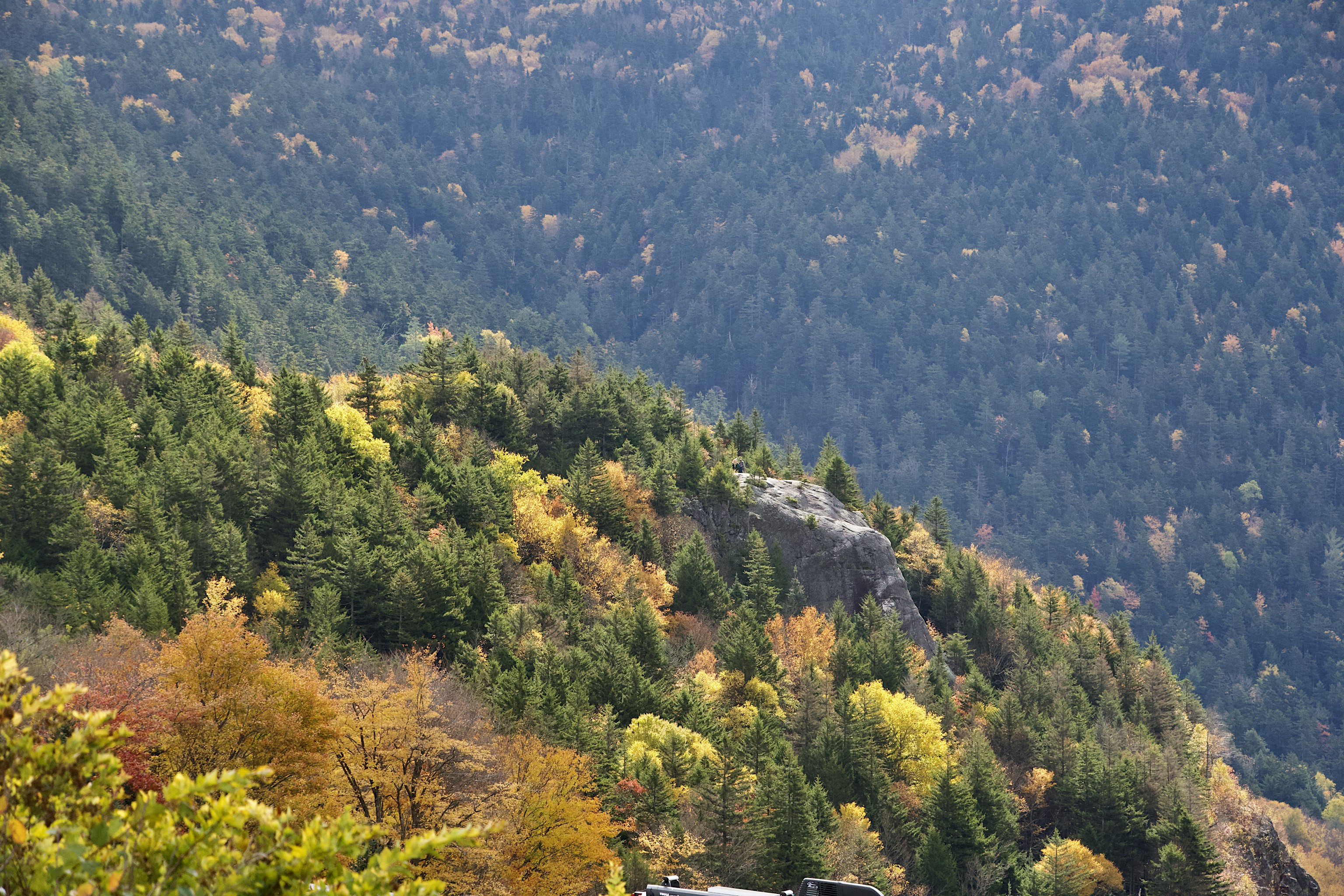
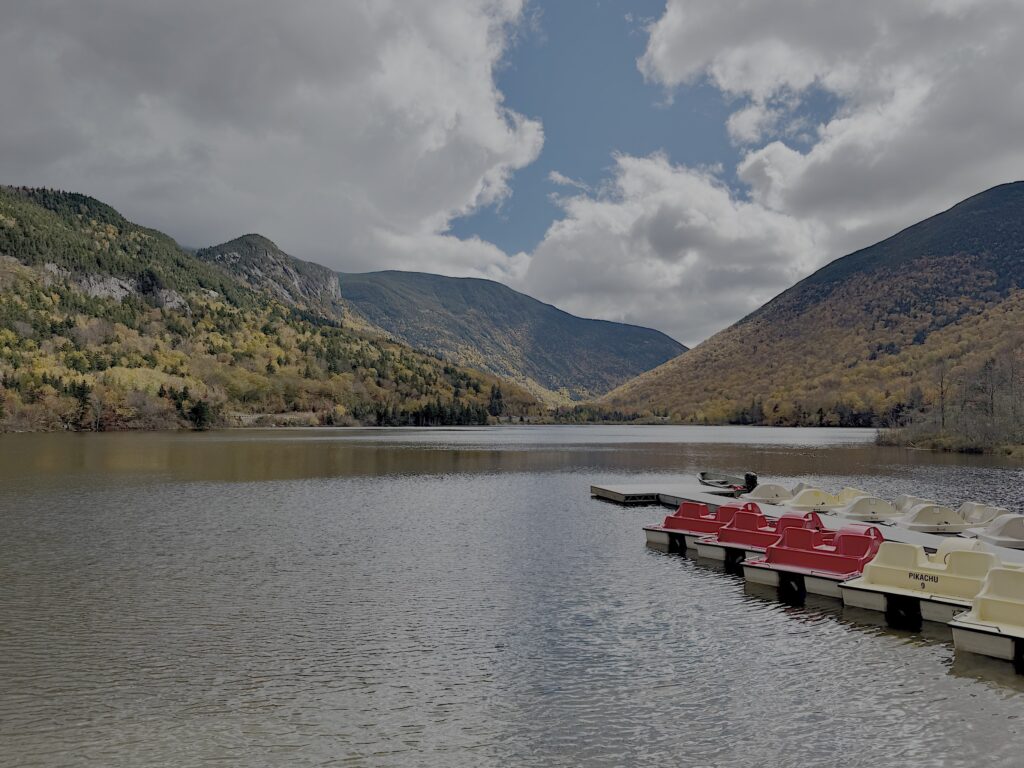
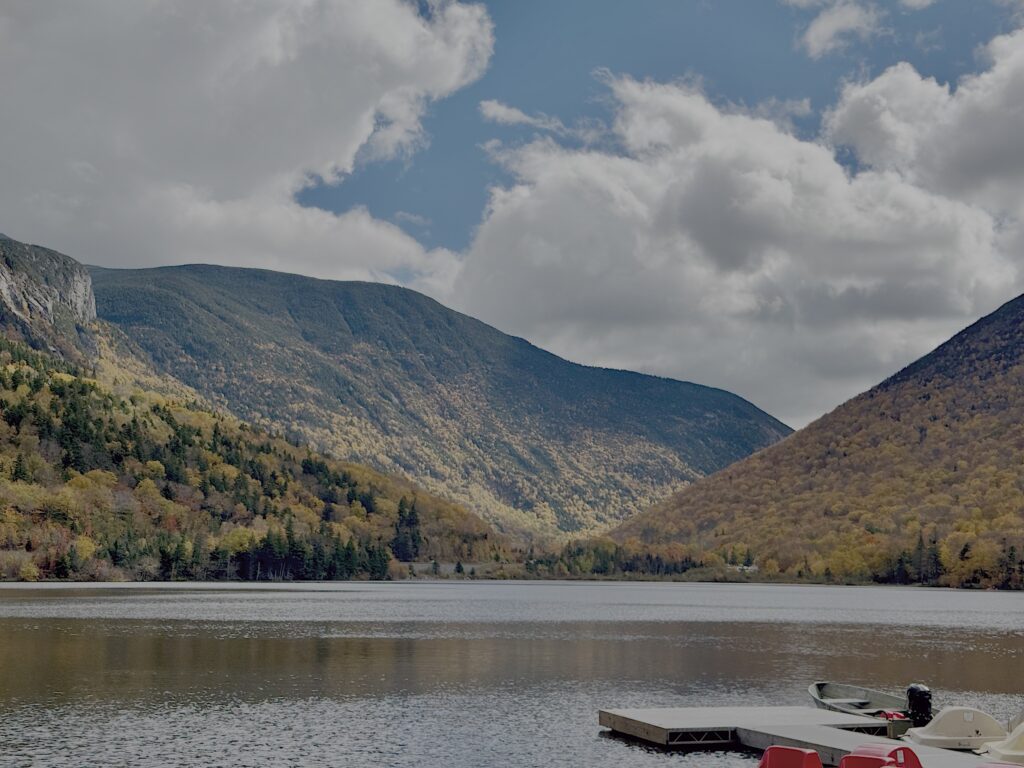
Friday, after checking out, I decided to head west to Franconia Notch, after having breakfast at Polly’s Pancake Parlor. I stopped at Echo Lake, and then Pilgrim Lake, where once you could see the Old Man of the Mountains. The Old Man is gone, but they’ve set up a sculpture; you can sight along some poles and see how it once looked. This morning was mostly cloudy with scattered holes in the clouds that would spotlight the mountains briefly.
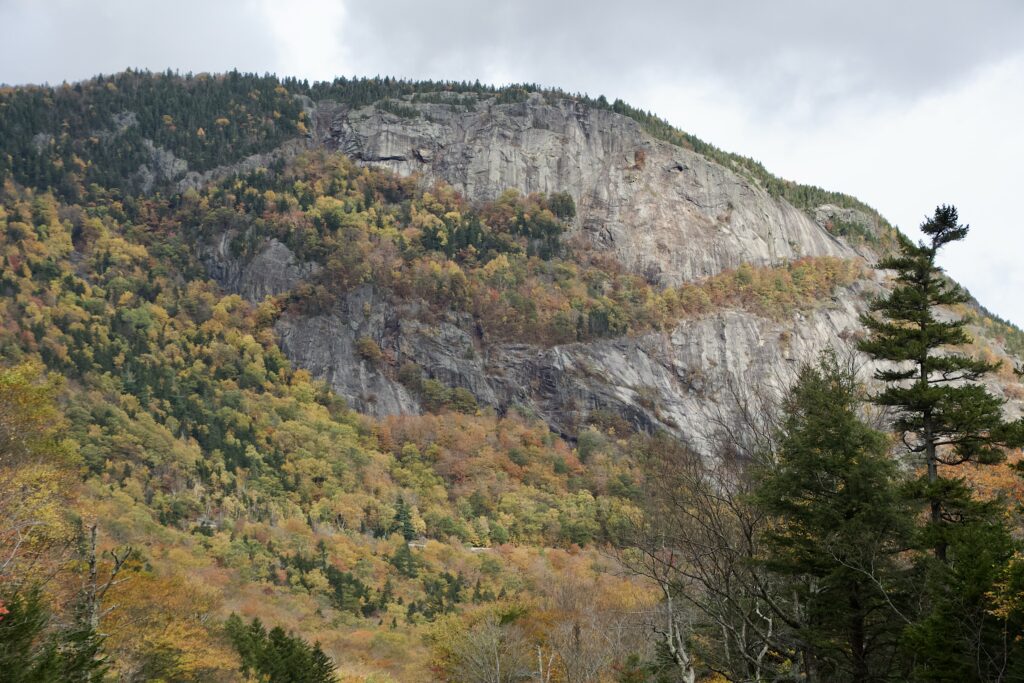
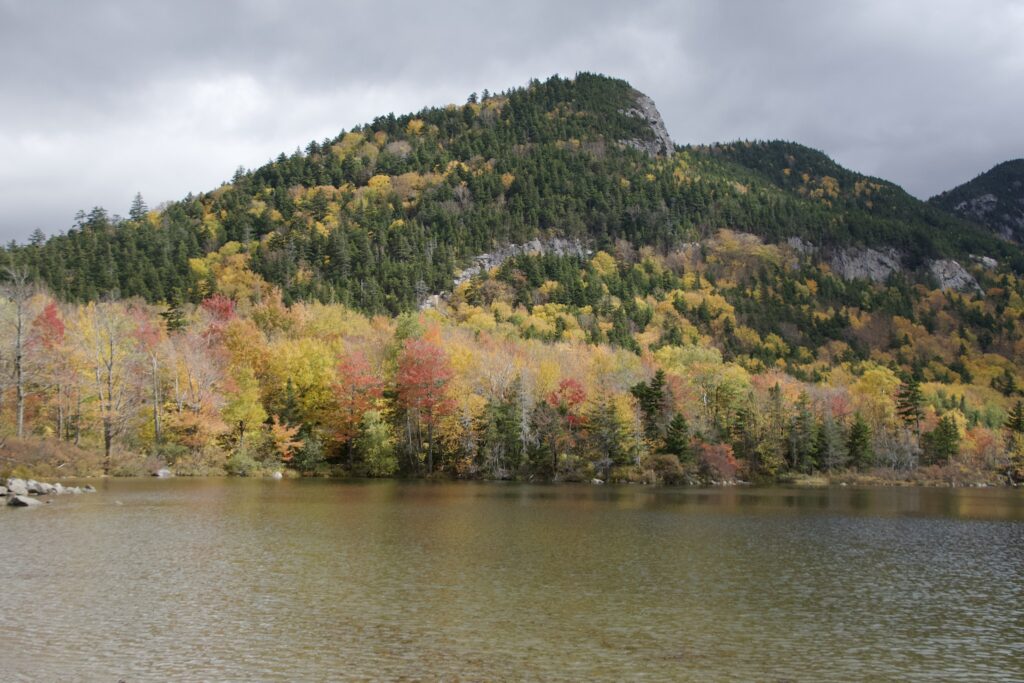
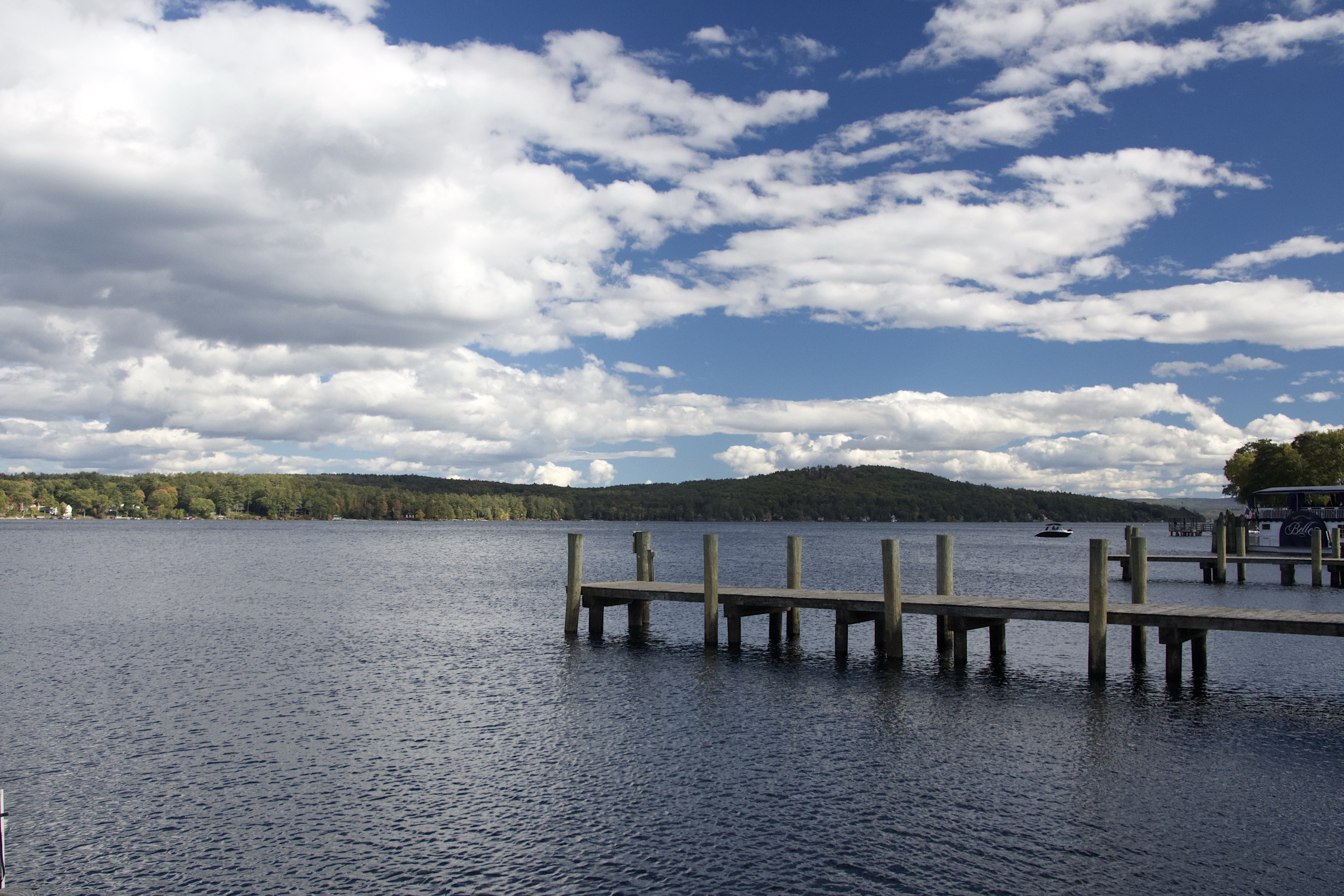
After Franconia, I headed south, staying on Route 3 most of the way. I stopped for a while in Meredith — I’d frequently passed by Meredith Bay before, but hadn’t stopped. The clouds against the deep blue sky were gorgeous.
Then, after a visit with my brother, it was time to head home, shaking my head at all the traffic heading north for the weekend.