Hyphenation

I’ve been re-reading Waiter Rant the last couple of days, and noticed something cool in one of his posts — some of the words at ends of lines were hyphenated. Justified text can cause large amounts of space between words; one way of reducing this is to break long words that fall at a line boundary between syllables so they fit better. So I fired up the Web Inspector, and sure enough, there was a -webkit-hyphens property on <p> tags that I hadn’t known about.

In print, hyphenation is not uncommon. On the web, it’s quite rare, because you never know exactly how a user agent will render text, or whether the user has resized the window, and up until recently, there was no way to automatically insert the hyphens where they belong.

So, I thought, “This looks cool, let me try it on my site,” looked up the syntax, added it to my stylesheet, took a look at one of my posts, and immediately decided it was a distraction.

It did even up the right margins somewhat, but I also found my eye sticking at the hyphenated words, and pausing there, in a way I don’t remember doing in print. Either the browser was applying hyphenation a lot more than a typesetter would (there were three or four hyphens added to my Thoughts on the Bombing post) or it’s a lot more intrusive on screen than it is on the page. Either way, it was taking me out of the post, and I immediately backed the change out.

For the curious, here are the styles I briefly added:

hyphens:auto; /* CSS3 standard */
-webkit-hyphens:auto; /* Target Webkit */
-webkit-hyphenate-character:"\2010";
-webkit-hyphenate-limit-after:1; /* rules to try to minimize widows and orphans */
-webkit-hyphenate-limit-before:3;
-moz-hyphens:auto; /* target Mozilla */

It was a lesson — cool new toys should always be tried, but they also should always be evaluated for suitability.

The Olympics

I’m very relieved to see that Boston’s Olympic bid is over. Personally, I’m not a sports fan, and have never cared about them, but I’ve also felt that it would be like the 2004 Democratic Convention – great for the money folks, but a huge inconvenience for anyone who actually has to live or work in or around the city. Lots of construction, lots of restrictive security, lots of disruption, lots of money spent on infrastructure with a very short active life.

Given the huge outlays needed to host modern day Olympic Games, I’ve long thought the idea of rotating cities needs to be re-examined. The Olympics need a permanent home. One where they can set up shop with all the facilities the Games need, in exactly the form they need them in. The expense of the infrastructure could be amortized over several sets of Games, and could be gradually grown and improved. Facilities could be custom built for the events they’re designed for, without worrying about winding up with an expensive white elephant that serves no purpose.

The permanent Olympic site would obviously be a draw during the Games, but I also think they would draw tourists during the off years, and facilities could host other events as well.

So where to put the permanent Olympic Games? To my mind, the obvious choice is Greece, their ancestral home, assuming the cost of building it was borne by the International Olympic Committee, and not the Greek government. It would have the added benefit of increasing Greek tourism, which would, hopefully, help the Greek economy dig out of the hole it’s in.

The Green Line’s “Great Cavern”

I first started using the MBTA in 1977, commuting to Boston College. Up through high school, I’d been dependent on either walking, getting a ride from my parents, or the very limited Canton-Mattapan bus line. I still remember my first trip over to BC that summer, checking out the route to school. The rapid transit line wasn’t very rapid, and the very decrepit PCC streetcar to BC was slow, dirty, bumpy and noisy. I distinctly remember being alarmed by the wheel squeal as we went through the curves in the subway.

But the MBTA opened up new worlds for me. I could get around on my own now. And as I learned to navigate it, I became a railfan. The Boeing Light Rail Vehicles were just being introduced, and I loved them. They were modern, clean and good looking, and if they were a little unreliable, well, they were new. Park Street Station was in the middle of renovations.  I started reading up on the history. And at some point, I noticed that the subway widened out between Arlington and Boylston.

I gradually realized this widening was unusual – most of the Green Line is a two track tunnel, with no space between it. This area is quite wide, with some stub end tracks in the middle, and a lot of empty space. Because it’s wide, underground and  unusual, I dubbed the area “Great Cavern”. But why does it exist? The answer starts with the original opening of the subway.

The Public Garden Incline

The Green Line was not originally a “line”, per se. It was simply a short length of tunnel designed to get all the streetcar lines off the street in the heart of downtown Boston. Tremont Street, where all the lines converged, had become incredibly congested. The solution was to put the streetcars underground. Construction started in 1895, and the first section ran under Tremont Street to the corner of Boylston, including Boylston Station, and then down Boylston Street to the Public Garden, where it veered out of the street and up an incline beside the street within the Garden itself. That incline would become the first part of Great Cavern.

The Boylston Street Subway

The original Tremont Street subway was a great success. It was one of those public works projects that really did what it was supposed to do – reduce congestion – and it helped spur a round of additional subway building. In 1911, the Legislature approved the building of the Boylston Street Subway. The subway was to be built from the junction of Commonwealth Ave and Beacon street, under the Muddy River, then going east along Boylston street to the corner of Tremont street… and there things got unclear. The legislation contemplated an additional two track tunnel under Tremont Street, or adding two more tracks to the Tremont Street tunnel. There were proposals from the Legislature to extend the new subway to Post Office square.

The Boston Transit Commission coped with the uncertainty by building the western sections of the new subway first, but by 1913, got permission to suspend work on the Tremont Street section of the new subway, and “temporarily” connect the Boylston Street Subway to the existing Tremont Street subway. That temporary connection remains today.

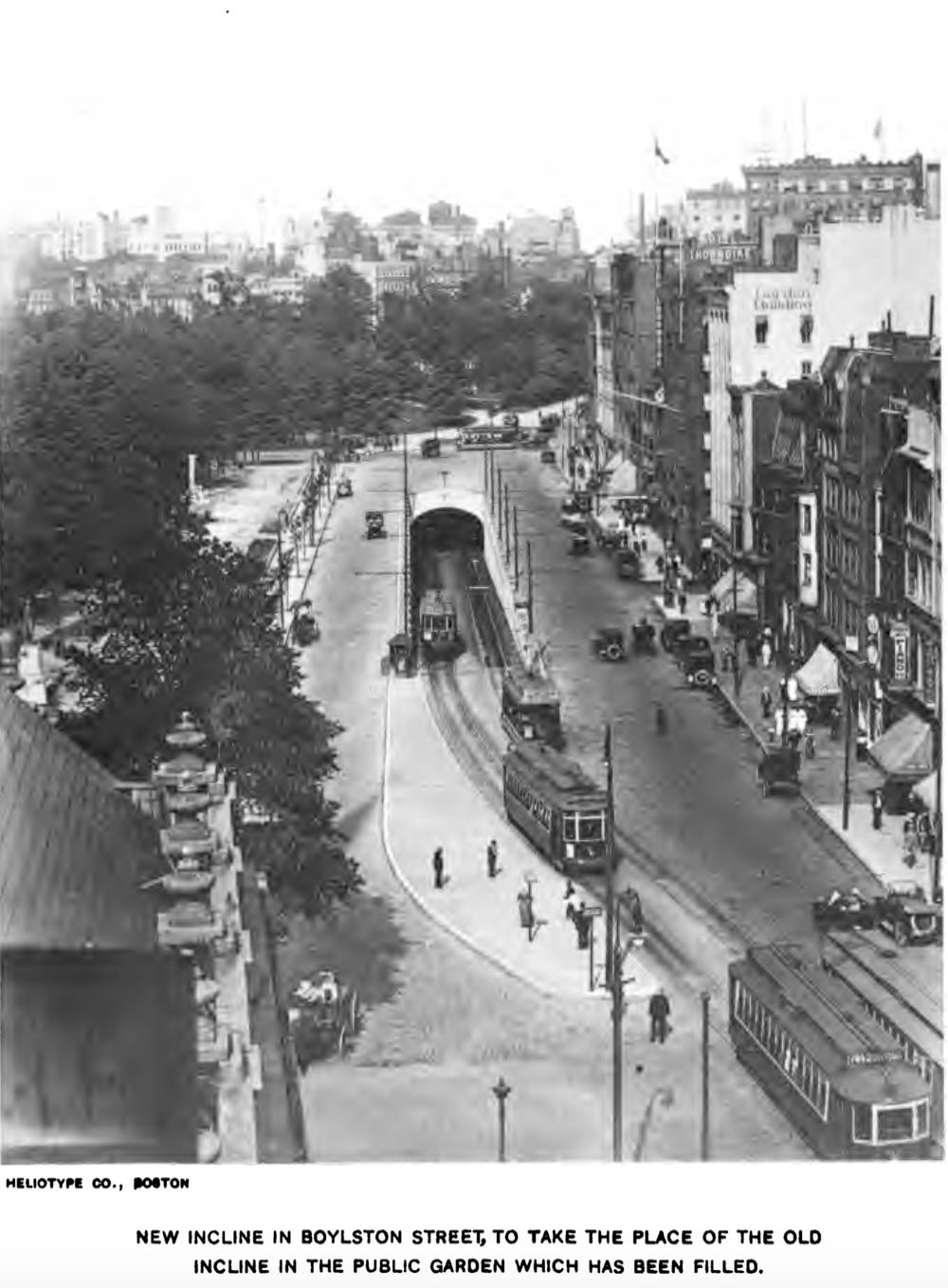
Keeping the original Public Garden incline would have required a “grade crossing” – outbound subway Boylston street traffic would have crossed over the inbound surface track, something that the engineers of that day sought to avoid at all costs. And yet, an incline was still necessary at that location, because streetcar traffic from Huntington Avenue would still be surface-running, and needed to enter the subway there. The solution was to widen Boylston street at that point, seal off the original Public Garden incline, and build a new incline in the middle of Boylston Street, between the inbound and outbound tracks. Enough of the original incline was left underground to act as a siding for car storage.

1914 Boylston Street Incline

1914 Boylston Street Incline. From the 1915 Boston Transit Commission Report.


The Transit Commission chose to deal with the Post Office Square question by deferring it; the Dorchester Tunnel (Red Line) was already under construction and the commission felt that the new tunnel would change traffic patterns; instead it was decided to enlarge Park Street Station.

The final part of the story came in 1941, with the building of the Huntington Avenue Subway. Streetcar traffic was rerouted from the surface of Boylston Street to the new subway, rendering the Boylston Street incline unnecessary. It was sealed off, leaving the large cavern we see today. The MBTA still uses the stubs of the tracks that once led to the surface for equipment storage.


Crossing the Santa Threshold

I’ve almost always had facial hair since my mid twenties. While I had hair on top, it was most often a mustache or full beard; once I started shaving my head I generally had a goatee. Every now and then I’d go clean shaven, just hate it and grow it back as soon as I could.

One style I haven’t done until now is a long beard. I first tried it a couple of years ago, but gave up on it after four months because it’s such a nuisance. I’ve found myself regretting giving up on it, though,  so I’m trying it again this year. I started growing it in January, and aside from a couple of snips to even it out a bit, and make it easier to eat, it’s been growing ever since.

It’s still a nuisance; messy while eating, and it tends to curl. It would look better trimmed, but at this point, I feel like I have an investment in it, and I’m curious to see how long I can let it grow. I’m hoping to last the year. Eventually, I hope, it will even out and I can neaten it up a bit.

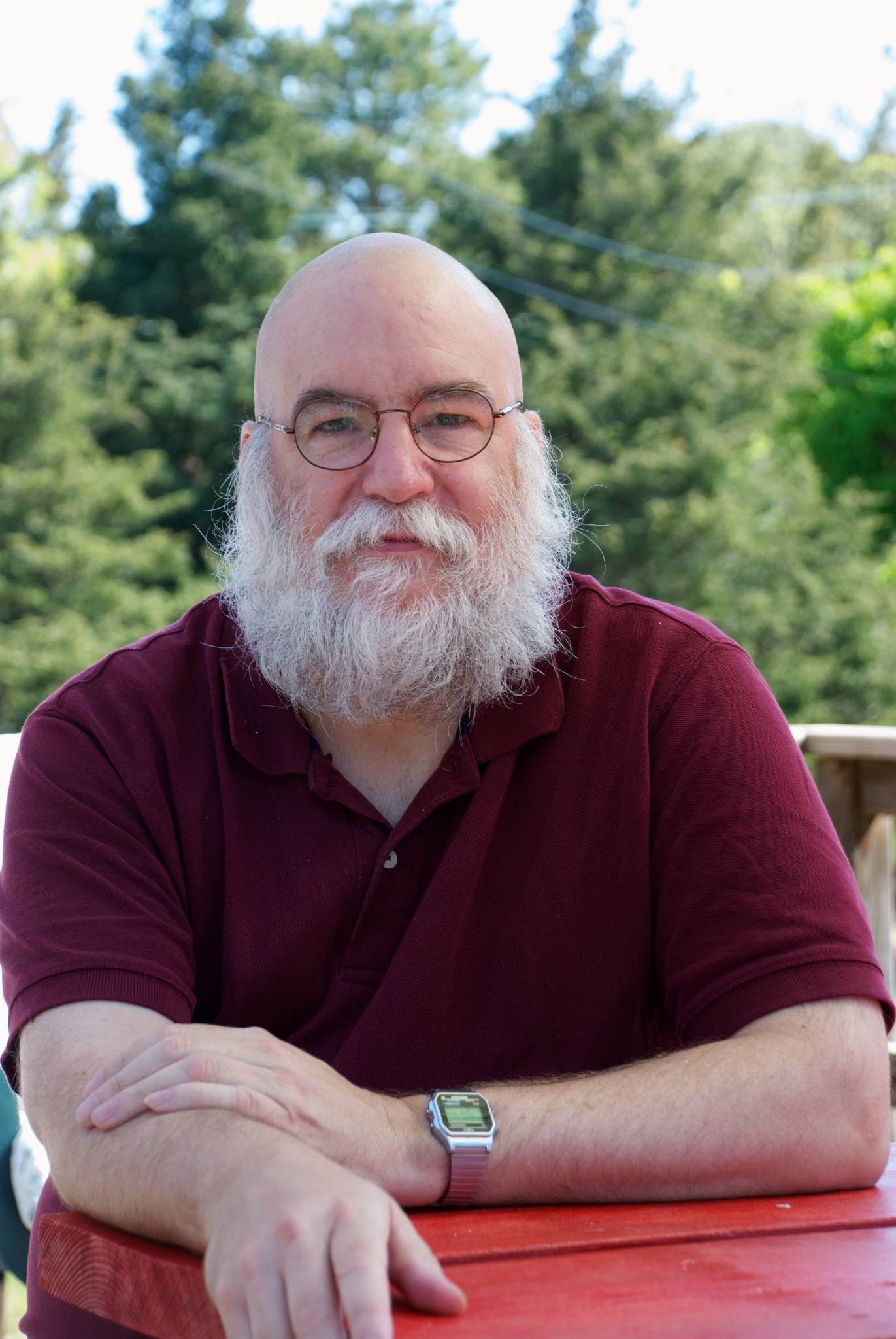
I wish I’d done this when I was younger. I’ve seen guys with long dark beards, and on some of them, the look works. Unfortunately, my beard is nearly white. This week, I seemed to have crossed the Santa threshold – suddenly, I’m getting comparisons to Santa from everyone.

The first one was from some random guy on the subway Wednesday night. I had an empty seat next to me, and some father was asking his son if he was afraid to sit next to Santa. Next up was one of my co-workers. Then this weekend, I saw a bunch of family members for the first time in a few months, and heard it again over and over again.

It isn’t a surprise, of course. I know what color my beard is. I did expect it to take longer, though, and I think it’s kind of funny that the change in reaction was so binary– last week, nothing, then this week, everyone is noticing it. So far, I think I’m fine with it.

Me with a 5 month beard

Me with a 5 month beard. Photo by Michael O’Hara

Actually, I think at this point, I look more like Poseidon than Santa – it’s not quite long enough, or quite white enough. But who knows what it will look like in December?

Special Effects, Then and Now

I saw the new Avengers movie a couple of weeks ago. It wasn’t my cup of tea. While I’ve seen a lot of comic book movies over the years, and in fact, did see the original Avengers movie a few years back, it’s been a while since I saw it, and haven’t seen any of the other Marvel universe movies in the meantime, so I had a devil of a time figuring out what was going on through the first part of the movie.

I also got very impatient with all the special effects. After you’ve seen a city trashed one or two times (or three or four) it gets very repetitive. I’m not a fan of visual action (which, come to think of it, is probably why I don’t care for spectator sports either). For me, the best parts of the Avengers movies are the jokes and the banter between the characters, not the action scenes.

Last Saturday, I caught the end of the original Star Trek episode “By Any Other Name”. In it, invaders from the Andromeda Galaxy take over the Enterprise for the trip home. At the end, Kirk convinces the alien commander to release control of the Enterprise and turn back. I was watching the remastered version, and there’s a longish shot of the Enterprise making a long swooping curve and turning around, and it felt vaguely wrong.

I was able to put my finger on what was bothering me yesterday. The original producers did not have a big budget for effects, so they had to exercise restraint. The original version features a stock shot, used in many episodes, of an aft view of the Enterprise. The camera is tight on the rear of the saucer section, positioned above the secondary hull and between the nacelles, which extend past the edge of the frame. We see the ship start to turn, and then dip down and out of the frame.

Is it a less ambitious shot than the remastered version? Yes. The shot was probably created very simply, by tilting the camera so the ship falls out of the frame.

Is the image quality pretty cruddy? Yes, especially since multiple generations of copies were needed to create it.

Did they overuse this particular shot? Unquestionably.

But, because the shot is tighter on the ship, the focus is much more on the ship, and not the surrounding galaxy. Because of the necessary restraint used in framing the shot, I feel the original sequence is actually stronger dramatically. I’d love to see a high quality remastered version of this shot, with maybe a little variation between episodes.

You can see a similar situation comparing the old Superman TV show with the Superman movies. The TV show was very cheaply made; to show Superman flying, they’d start off with George Reeves hitting an offscreen trampoline, bouncing into the air, then cut to a medium shot of him in air, in front of a motion blurred rear projection background. By the time the movies with Chris Reeve were made (I haven’t seen the more recent ones), the producers were able to place Superman in a scene with buildings and other scenery more or less convincingly.

Unfortunately, showing a long shot of a tiny Superman flying around a bunch of buildings reduces his importance in the shot. He’s just a part of the shot. While the series definitely suffered from the jump cut from Superman taking off to Superman in mid air – with no shots taking the viewer from the ground to the air, it was obvious that the series was cheating– the inability of the television budget to show Superman over the city meant that the producers had to tighten the focus onto Superman himself. And for most flying scenes, where the point is simply to get Superman from Point A to Point B, it’s probably a better dramatic choice.

I think current day movies could stand to exercise similar restraint. I think they would be improved by tightening the focus on the characters. It’s great that they can do so much photorealistically – but any photographer can tell you a big part of making a picture is deciding what to focus on, what to get close to, and what to leave out.


First Paddle of the Season

I took the kayak out for the first time of the season this afternoon. I’d put the roof racks on the car a week ago, but hadn’t actually loaded the boat onto the cradles, meaning I had to spend a fair amount of time centering them up yesterday. I also discovered how out of shape I am, and how heavy the kayak is.

I’d originally wanted to leave very early in the morning, but ended up going mid-day instead. I decided to go back to the landing in Auburndale, opposite the Newton Boathouse. I headed upstream, and stopped just short of the Route 16 dam; where there are shoals.

Once past the golf course footbridge, the current picked up noticeably; and going past the old railroad bridge, it felt like I was paddling as hard as I could just to stay in place. The payoff came when I turned around and the river grabbed the boat and I flew downriver.

Everywhere I looked, trees and shrubs were leafing out; their brand new foliage contrasting with the dead, leftover branches from the year before.

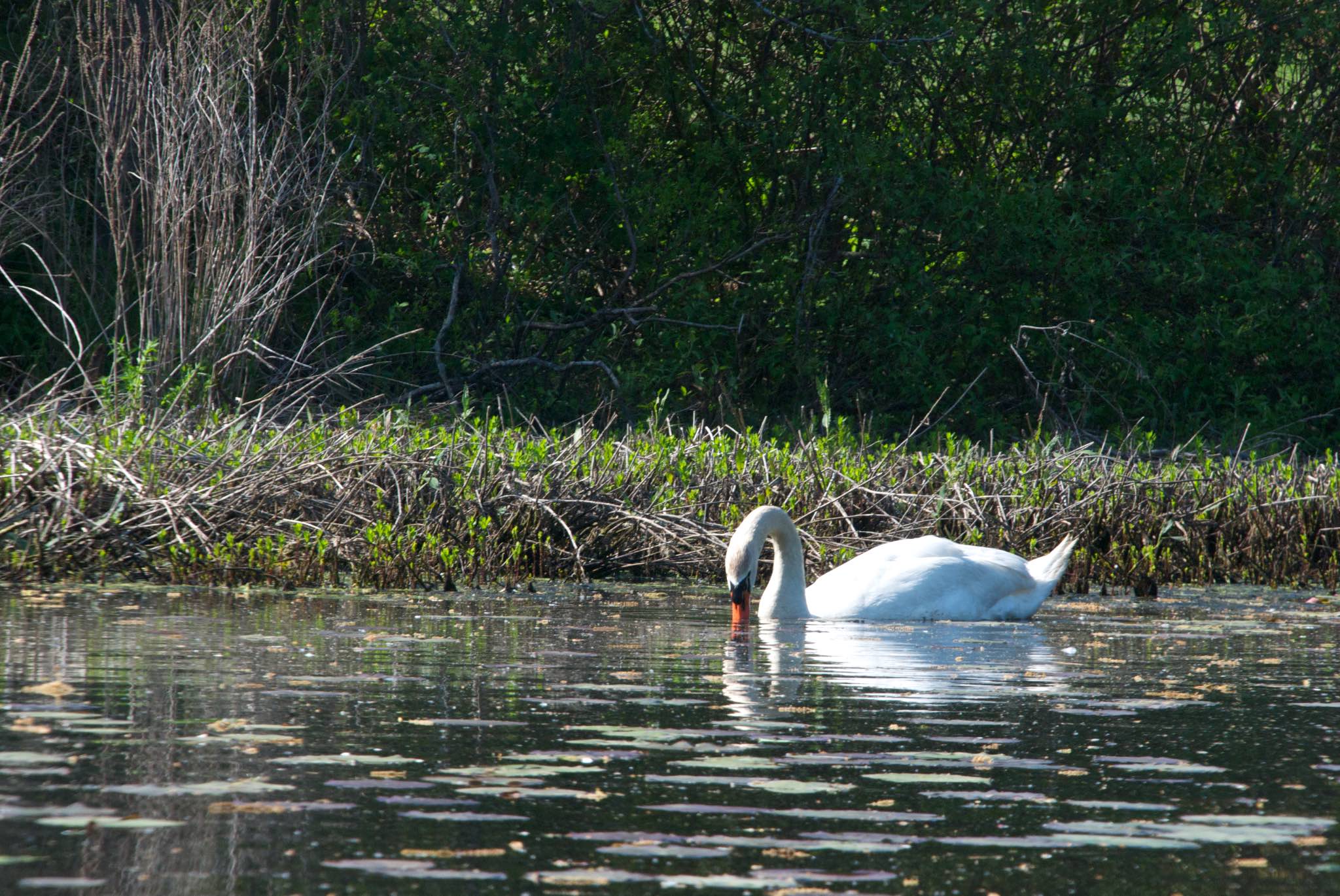
Near the Park Ave bridge, I saw this swan.

Swan

Swan

Swans can be aggressive and territorial, but this one didn’t seem too much bothered by me.

I’m still learning the ways of this boat. I must have accidentally shifted the pedal positions for the rudder pedals; with the rudder down, I kept recurving to the right. It’s nigh impossible to adjust them while in the boat, so I ended up flipping up the rudder and paddle steering. I’m getting a little better at getting in and out of the boat, but feel that I still have a ways to go.

I’m realizing that the Thule Glide and Set carrier I got to mount the kayak to the roof is not a great match for a Honda Element. The premise of the carrier is that the rear cradle is relatively slippery; you get the bow of the boat into the rear cradle, and then slide it forward. There are two problems using it with the Element: first, the car has factory mounting points, and the rear points are about three feet forward of the end of the car and secondly, it’s a tall car. It’s hard getting the boat up that high, and the kayak ends up resting on the roof until I can get onto the tailgate, lift the rear of the kayak up, and slide it forward. Last fall, I managed to put some fairly deep scratches into the roof paint trying to load the kayak; I’ve since picked up a cheap mat that I lay on top of the roof while loading and unloading. Fortunately, the Element is roomy enough inside that I can take along a small bench to use as a step stool to help me get the kayak on and off. I’m hoping to get faster with the loading and unloading process.

Feeling Guilty

I got a phone call at work today from some salesman trying to push an extended service plan for the car. It was one of those scummy outfits that try to pretend that They’re An Official Part of American Honda.

I really detest this kind of fraud, and was already irritable from a sleepless night last night, so I went into Mike Wallace mode and just lit into him. The fact that I had an audience at work probably spurred me on a bit too. I ended up yelling at him before hanging up on him. I should have handled it more politely. I definitely stepped over the line, and regret it.

But not enough to buy his scummy plan.

End of an Ice Age

Slowly, slowly, the snow is receding. The front yard is mostly free of snow, except the big banks by the house, which are in the shade. I freed a a few branches of the bushes from their burdens of snow this morning, but several of the others are still matted down. I was able to retrieve the outside thermometer, which is usually perched outside the living room window, from where it had blown during one of the storms. I was also able to hop over the remains of one drift of snow to get to the side yard, where the daylilies are starting to green up.

The back yard is another story. It’s shaded, and we blew and threw a lot of snow into it, and it’s still mostly snow covered, except by the stone wall. The wall of snow that came off the porch roof is still pretty high, and the mound of snow from the driveway/back walk still makes getting into the backyard impossible. It’s been receding from the warmth of the walkway, but it’s still about four feet high. I’ve been attacking it periodically when I get home from work trying to spread it out so it will melt faster.

I’ve seen a couple of motorcycles on the road this weekend, so I tried starting up the bike. The battery had enough juice to light the lights, but not enough to turn over the engine. Hopefully a little trickle charging will take care of that.

The Murder of Victor Roman

There’s been a lot of local coverage lately about the 25th anniversary of the Gardner Museum theft. For me, though, the much more important event of that week was the murder of Victor Roman.

Twenty five years ago, I was working at Photo:Hour, a chain of one hour photo labs, as a district manager. I was switching between stores, sometimes working in Harvard Square, sometimes in our original store in downtown Boston, sometimes checking in on the other stores in our chain. The manager of the Winter Street store had hired a young kid off the Street, Victor Roman, to help out at the counter. It eventually became clear that the manager there was in over his head, and I spent more and more time there, and got to know Victor pretty well.

Victor was about 18 at that point, and, from what we could see, was just a great kid. Limited in certain ways – he never did master the printer, and he was definitely having trouble in school – but always very willing to pitch in and help out. He was good at the counter, and had very definite ideas about right and wrong. He was into comic books, and some of his own drawings were amazing. Tom Giampapa, the owner, was interviewed for an article in the Boston Globe later, and said, “He was really a likeable kid. He just had the values that you look for in people…We used to discuss Victor in staff meetings because we loved the guy.”

I remember the night we took up the original tile floor at Winter Street – it had been poorly installed, and we decided to replace it with rubber flooring. Victor stayed late that night helping to rip up the old tile and cart it away. I drove him home that night, and was shocked at the neighborhood he was living in.

Victor was very much still a kid, especially when I first met him. He laughed and joked a lot, but he was also offended by injustice. Many of us can see something wrong, look at it, and sigh to ourselves, and say “that’s just how things are.” Not Victor. He was impulsive. I remember him buying a car, and losing it a couple of months later. Ironically, it was an impulsive act – fathering a child with his girlfriend – that helped steady him the most. He loved his little daughter, and wanted to be a good father.

At the beginning of 1990, we had Victor working for us full time. He’d dropped out of school and was covering shifts in both Harvard Square and downtown Boston. Harvard Square was a bit of a stretch for him, but he was always willing to help out.

My cousin Bill died that March, at the age of 30 of some sort of heart condition, leaving two young sons behind.* It was a shock because he was so young and seemingly so healthy.  I remember working in Harvard Square with Victor that Friday before heading down to Newport that Sunday for the wake, with the funeral on Monday. I stayed overnight with my grandmother, so that I could take her down for the funeral on Monday.

There had been a lot of gang violence in Boston around that time. It wasn’t rare to hear on the radio in the morning that another young man had been killed, and after a while, one tended to tune out the reports. I was only half listening as I was getting Grandma into the car, when I heard the name of the latest victim, then rushed to get a newspaper – sure enough, it was Victor Roman, of Mattapan.

I’m still not sure of the circumstances. What I heard was that he had been stabbed by a 14 year old gang wannabe, because he had interfered with a mugging on the Orange Line. I remember him saying that he had to be careful because there were people out to get him, but he said it with such cheerful bravado, that I didn’t really take it seriously.

I don’t feel responsible for his death. I didn’t wield the knife. But I do feel responsible for failing to stop it, for failing to get him to safety.

The Globe ran an article about his murder a few weeks later:

Victor Roman loved comic-book superheroes and even modeled himself after Spiderman. On the streets of Boston, Roman, on more than one occasion, found himself acting out the exploits of the fictional characters he idolized.

In January, he interceded when a youth was going to get stabbed for his coat. And that same month, relatives said, he thwarted the plans of youths to mug an elderly woman.

“He had a lot of principles and a lot of values,” said Thomas Giampapa, who was Roman’s boss at Photo:Hour in Cambridge, a photo processing store where Roman worked as a lab technician. “He was making his choice and his choice was to do the right thing.”

But doing the right thing in helping the woman apparently led to Roman’s death in March.

A 19-year-old Dorchester man and a father for two months, Roman died last month every bit the hero he dreamed of being, relatives said.

Relatives said that while riding on the Orange Line of the Massachusetts Bay Transportation Authority, Roman overheard several youths planning to mug a woman passenger and he intervened.

The athletically built Roman apparently confronted the group, took a knife from a smaller, 14-year-old youth, slapped the youth several times and told him that causing trouble was no way to live, a police source said.

At the time, the youth, who later was charged with Roman’s killing, said he would seek revenge, said Roman’s uncle, Victor Mejias.

But Mejias and others said although Roman believed some gang members wanted to teach him a lesson for interfering, he never showed fear.

“Everybody warned him to be careful, but he said they weren’t going to do anything because they were just kids,” Mejias said.

I’m not sure now what the full story is. A few months later, one of his friends brought in some pictures of Victor; among them was a picture of Victor holding a gun in front of stacks of money. Whether he was friends with someone in the drug trade and was merely clowning around, or whether he was actively engaged in it, I don’t know. If I had to guess, I’d guess that he’d been involved with a gang, decided to get out, and was killed for it. But if so, we never saw that side of him.

For me though, it doesn’t really matter. I know what I did see. I did see a kid who worked hard. I did see someone who was trying to better himself. I did see a young man who was always willing to help. I did see a young father who wanted the best for his daughter. It’s because of Victor that when I hear about people like Trayvon Martin, that I can’t just dismiss them out of hand.

*It doesn’t feel right somehow to mention Bill’s death merely in passing. We were very close growing up. But while shocking, and a huge blow to the family, his death was an act of nature, like a lighting bolt out of the blue.

Sea Rovers 2015

This past weekend, I attended the 61st Annual Boston Sea Rovers Clinic.
The Boston Sea Rovers are a “volunteer organization dedicated to increasing awareness and appreciation of the marine environment.. [and] are one of the oldest and most distinguished underwater clubs in America”.

The Clinic is a weekend of dive talks and presentations, with an exhibition hall thrown in for  good measure. Essentially, the format is that they run hourly presentations in three different rooms each hour on both Saturday and Sunday, and on Saturday night, they hold a film festival. Generally there are a few staple topics – often there is a track devoted to wreck diving, there are usually several talks about sharks, plus presentations about all sorts of exotic diving – I’ve seen presentations about Iceland, Antarctica, the Philippines, Indonesia, Bonaire, and Grand Cayman island at various shows. I’ve called them talks, but they’re almost always illustrated with wonderful photographs and video.

When I first started going to the show, it was held in the Fairmount Hotel in downtown Boston, but in 2012, the show moved to the DoubleTree Hotel in Danvers. The last couple of years I commuted up there for both days; by the end of the day on Sunday last year, I was totally fried, and swore that next time, I’d just stay overnight, which I did this year.

I’d give the show a B this year. It seemed like there fewer exhibitors in the hall this year, and several of the presentations I most wanted to see overlapped. For example, I would have liked to have heard George Buckley’s lecture about the reefs of Bonaire, but I also wanted to hear Berkley White’s talk about creative photography. Also, several of the talks this year fell into the “good, but ___” category. Most importantly, I missed seeing it with my friend Ralph, who has moved out of the area. I did get to see Paul and Daire and Ken and Kim.

Some of the better talks:

Greg Skomal is always great. He’s a scientist at heart, but he has the gift of being funny and entertaining, and knows how to explain things. This year’s talk, “Techno Shark”, explained how they’re getting more data on how sharks live through better tracking technology. He was also the Master of Ceremonies at the film festival.

Erin Quigley demonstrated how to save less than perfect shots in Adobe Lightroom in “How to Re-light your Images in Post”. She’s a good communicator, and knows her stuff. I’m currently not using Lightroom, but may move to it if Apple’s new Photos program doesn’t eventually bring back Aperture’s editing tools.

Bart Malone is a wreck diver, and put together “Marine Life, Above, Below and Around East Coast Wrecks” after being asked about it last year. The photography (by his dive buddies) was good, but he frankly admitted that he wasn’t as much interested in the marine life as he was in the wrecks. I applaud the honesty, but wonder if the talk would have been better if it had been given by the photographers, or by someone who had more interest in the marine life. Wrecks develop a vibrant marine life community; the talk would have been better if it had addressed that more directly.

Ryan King talked about wrecks in the Great Lakes in “Tales of Tragedy Along America’s North Coast”. He had great photography of some fairly intact wrecks, and was able to present the story of the wrecks as well, without too many boring meandering digressions about putting together the expedition (the besetting sin of wreck diving talks).

Michael Salvarezza and Christopher Weaver ended the Saturday seminars with “Smuggler to Shipwreck, the Notorious Story of the Golden Venture. This talk was really good, but it was also a stretch for Sea Rovers. The Golden Venture ran aground off the coast of Rockaway NY, with a cargo of illegal Chinese immigrants. The talk – and it was a good one – was really about human trafficking, and only loosely tied into Sea Rovers by the fact that the ship was eventually refloated, and ended its days as an artificial reef off the coast of Boca Raton.

After supper, it was time for the film festival. There were three shorts, and one half hour presentation. The first short was by Paul Cater Deaton, shot in black and white as an homage to the old Sea Hunt show.

The major presentation was by Rick Rosenthal. Scientists and the military have long known about the “Deep Scattering Layer.” It’s a layer in the ocean first discovered when sonar came into use; it’s a layer that scatters the sonar beam, and therefore looks (to sonar) like a false bottom. It’s thick enough that military subs can actually hide from sonar underneath it, and it moves up and down the water column at night. It’s actually a thick layer of marine life that approaches the surface at night, and Rosenthal was determined to capture it with his camera, and in the process got great footage of the entire food chain, from plankton to anchovies, up to jacks and sharks and dolphins.

The next presentation was by Nick Caloyanis, about basking sharks. This short featured Greg Skomal.

The last presentation of the night was by Howard and Michelle Hall; they got some great footage of whales.

I started Sunday with Richard E Hyman’s adventures with Jacques Cousteau. He was a crewman aboard Calypso during the seventies, and had a number of interesting pictures and stories.

Paul Cater Deaton’s talk, “The Last Hurrah” was a bit of a disappointment. Ostensibly about diving pioneer Stan Waterman’s last dive trip (he’s over 90) it suffered from a misplaced focus. Most of the footage — and it was very good — was just underwater footage of Grand Cayman Island. There was very little about Stan Waterman himself, other than some footage shot at a reception for him. Nothing about how he felt starting off on a trip for the last time, nothing about what he himself found there, no words from him about what it felt like coming out of the water the last time.

The last talk I attended was Josh Cummings and Nathan Garrett talking about diving year round in the Northeast. Pretty decent photography, including some ice diving, but I would have liked to have heard more about what it takes to dive during the winter.

There were several talks listed that I would have liked to have seen: George Buckley talking about the Coral Reefs of Bonaire, Joe Romeiro and Sharks at Night,and Captain Robert MacKinnon talking about the British raid on Washington in 1814, among others. It also would have been good to have been able to see Jerry Shine and Andrew Martinez’s talks. Perhaps some other time.