I’ve been on vacation this past week. I didn’t really plan it out, because I’ve been dealing with some health issues, but I knew I wanted to revisit the White Mountains on the motorcycle, which means I had to book the trip with an eye on the weather.
It’s turned out to be a wet week. We had rain last Sunday into Monday. The forecast called for rain ending Monday, some scattered showers Tuesday, fine on Wednesday, and more rain in New Hampshire on Thursday. So, while I’d hoped to do a four day trip beforehand, I settled for three days, leaving Monday and coming back on Wednesday.
Monday
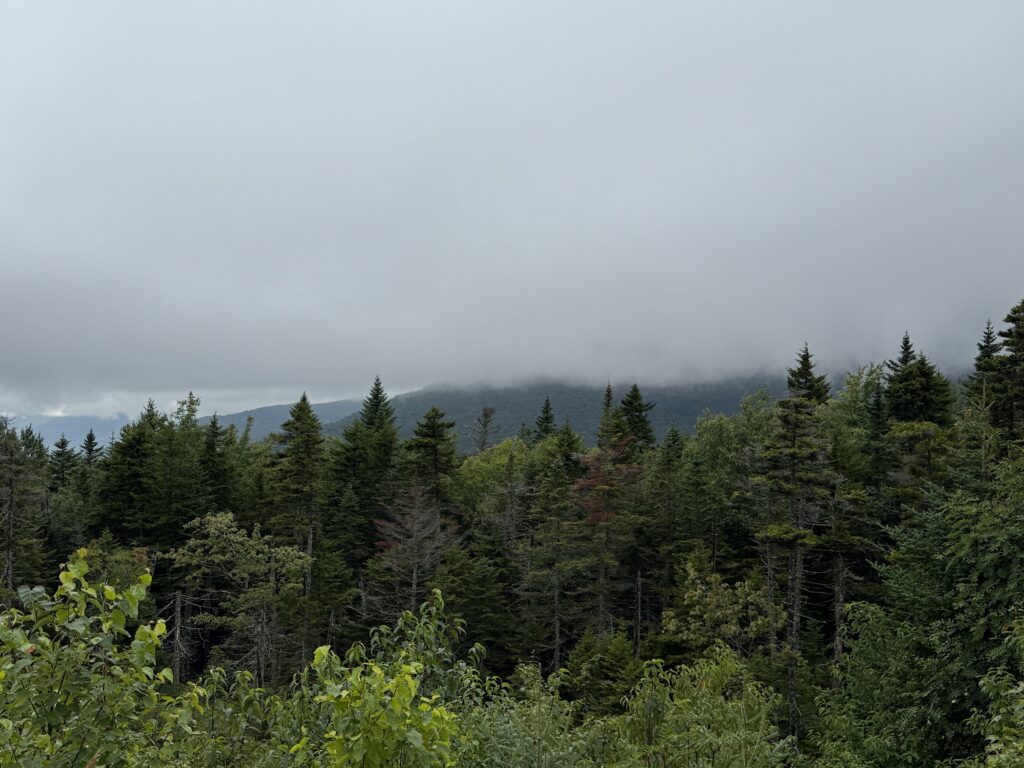
Monday morning started with light rain, but the rain stopped by the time I left the house around 11:30. The jacket I bought last fall came with a rain shell, so I put it on, but it turned out to be mostly unnecessary. I made surprisingly good time through Boston, then headed north on I-93 until Plymouth, and then switched over to Route 3 until I reached Route 112, which becomes the Kancamancus. I just love that road. Today, it was cloudy and overcast, with clouds wafting over the mountaintops.
I was tempted to take Bear Notch Road into Bartlett, but I had a 9 AM ticket for the Conway Scenic Railway the next morning, and wanted to scout out a place in North Conway for breakfast the next day. I was disappointed to find that the place I’d gone last year was closed, but did find that the Rise and Dine Bistro right off the main street in North Conway would be open. After determining that, I spent a little time bopping around North Conway before heading to Attitash, where I was booked for the next two nights.
After a day in the saddle, I’d been looking forward to spending some time in the hot tub. My back was comparatively better than it had been the year before, but it was still a little sore. So after a quick dinner, I spent some time soaking in the jacuzzi by the pool.
Tuesday
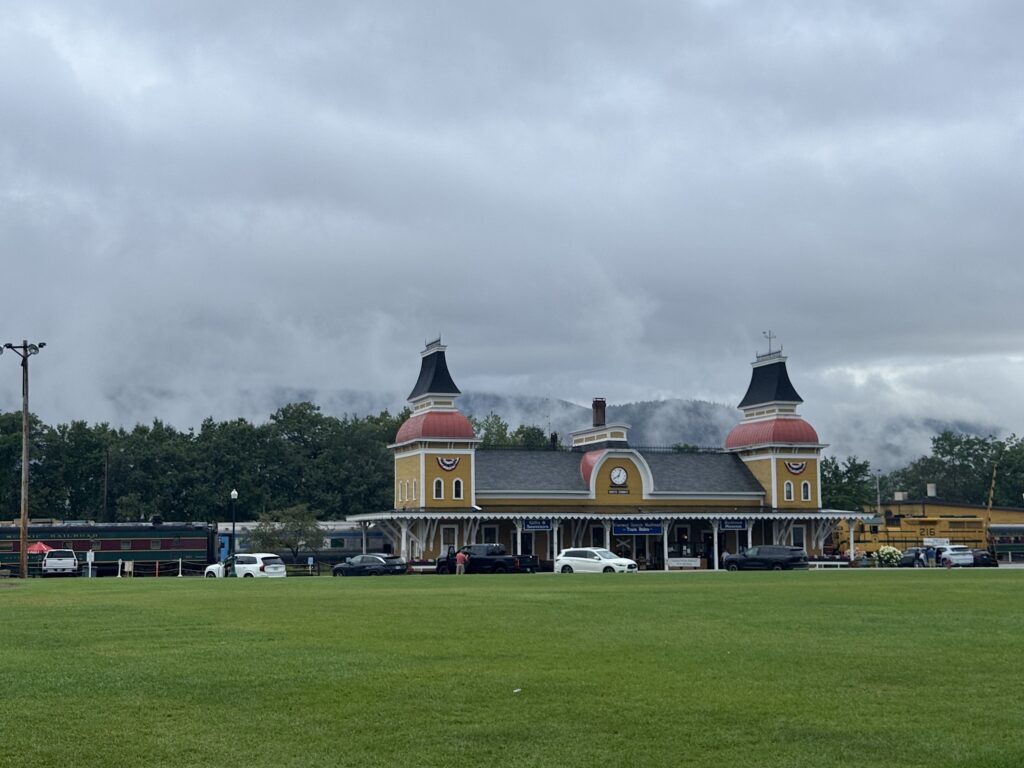
Tuesday morning I’d booked a 9 AM trip on the Conway Scenic Railway’s Mountaineer, which runs from North Conway along the side of Willy’s Mountain to Crawford Notch. When I’d done it before, I’d booked a Comfort Class ticket, which is a reserved seat in the main coach. This time I booked a Observation Dome Class ticket, which puts you in an exposed clear dome at the top of the train. It’s nice, but not necessarily $68 nicer.
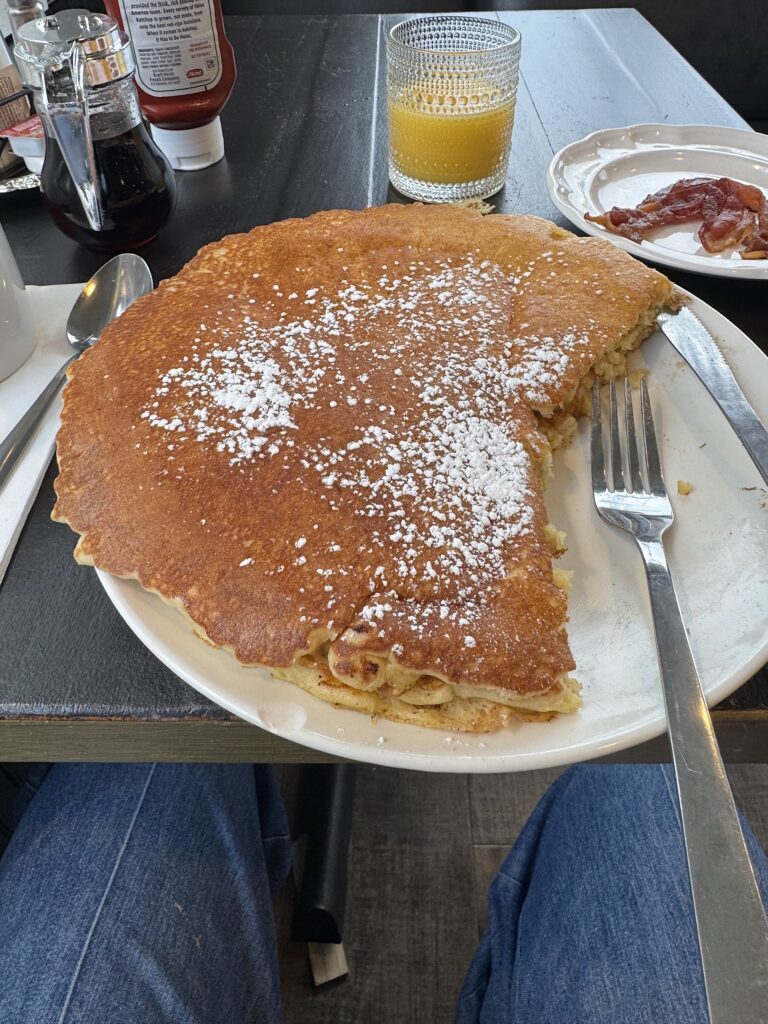
One of the things I’ve been dealing with all summer is recurring low level nausea. (Yes, it’s been checked out, and no, there doesn’t seem to be anything horrible going on.) Some days it’s fine, other days, it’s been bothersome. It flared up again this week, and I’d been concerned the day before with throwing up inside my helmet. This morning, I was trying to balance the need to have something to eat vs feeling queasy. In the end, I ordered pancakes, and was shocked to see the biggest pancake I’ve ever seen on my plate. It was very good, but there was no way I was going to be able to eat the whole thing. I managed to get about a third of it down before heading across the street to the station.
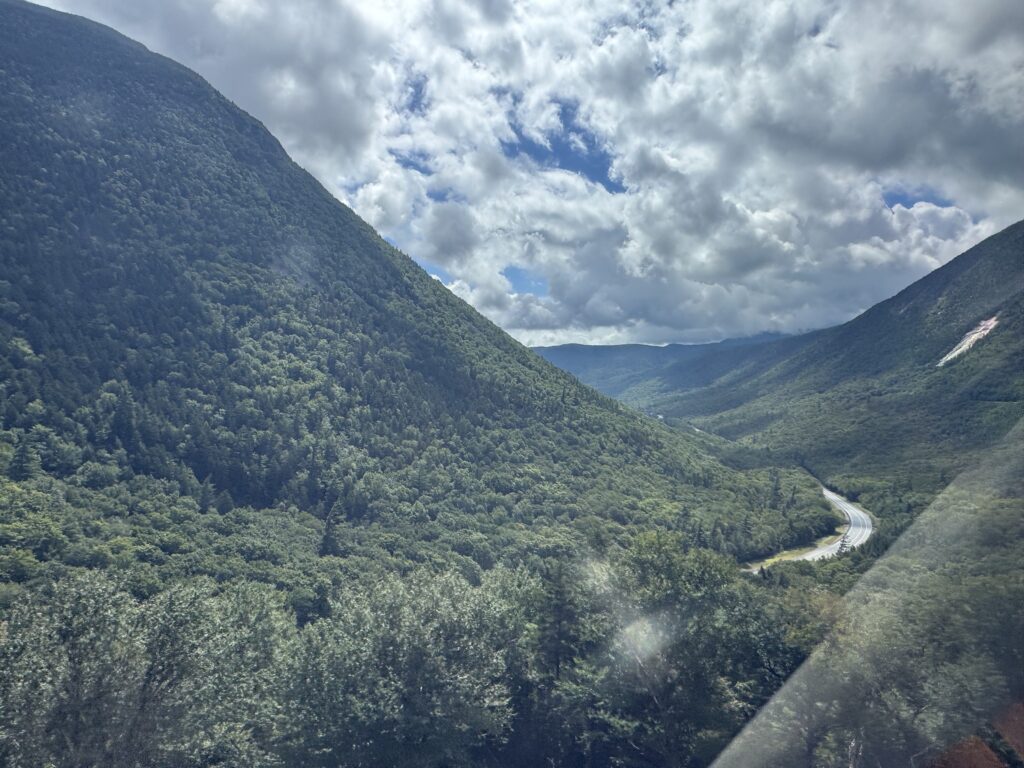
When I boarded, I slipped into the first empty seat I spotted, and realized about 30 seconds too late that I should have picked a seat on the other side — the right side is very definitely better than the left on the Mountaineer. Still, my table companions, Dennis and Patricia, were pleasant company, and it was a nice trip up to Crawford Notch, where we were able to get out. You do switch sides for the return trip, so we had the scenic side for the trip back.
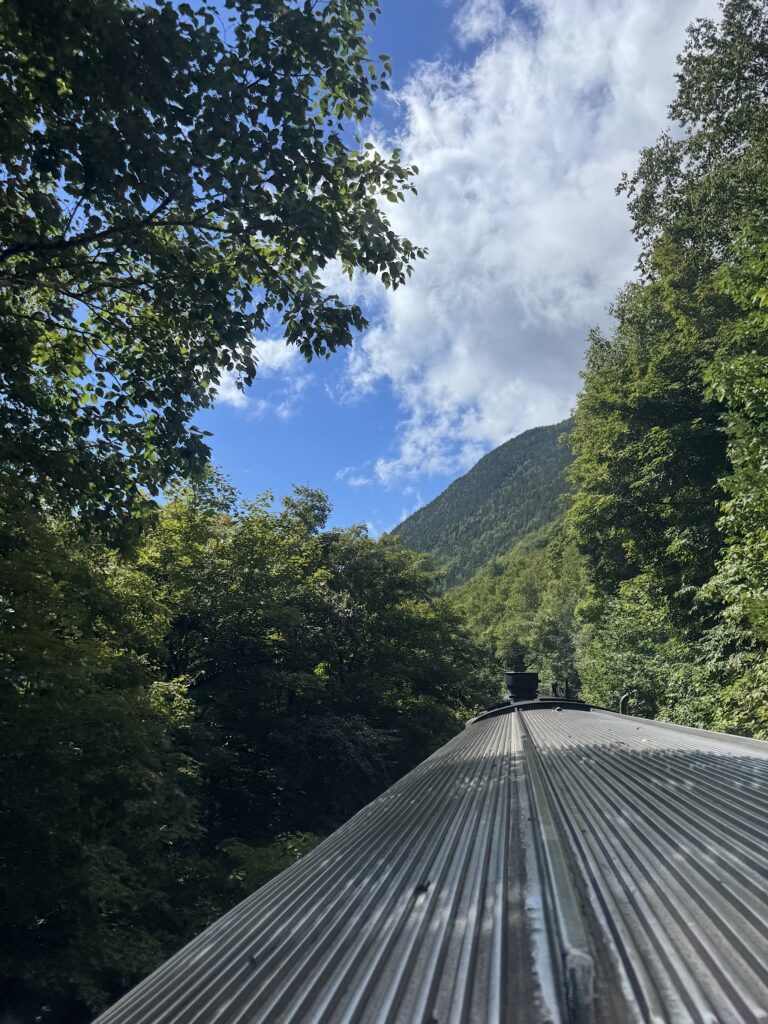
The Observation Dome is great for looking out, but not so wonderful if you want to take pictures, due to reflections. Eventually, I found the trick was to position the phone — this is the first trip I’ve done where I left the Nikon at home — fairly low on the window where the reflections are less. You can also look directly along the top or rear of the train and see along the direction of travel.
This week was largely improvised, but one of the things I was thinking about was taking the Mount Washington Cog Railway up Mount Washington. The problem was whether I could get from North Conway after the Mountaineer returned to the station, up to the Cog’s base station in time for their last trip of the day. Siri seemed to think it could be done in less than an hour, but I’ve learned its estimates aren’t always reliable. I was also feeling slightly queasy, and wasn’t sure I wanted to. But we got back to North Conway, and I decided to give it a go, heading west along Route 302. I do like that road on the motorcycle, and was able to get up there in ample time to buy a ticket and nibble at a muffin and have a cup of coffee before it was time to leave.
The last time I’d ridden The Cog, in 2008, most of the locomotives were the old steam locomotives. Now, they still run a few steam trips during the week, but most of their trips are done via biodiesel engines, which permit faster and more frequent service, and don’t send plumes of coal smoke into the mountain air.
Unfortunately, like the Conway Scenic, The Cog uses assigned seats, and like the Conway Scenic, there is a good side and a bad side of the train, and I ended up on the bad side, so most of the view was of trees until we cleared the tree line.
The startling thing about The Cog is the incline — average is over 25%, with a maximum of 37% over Jacob’s Ladder. The steam engines have inclined boilers, in order to keep the steam tubes within the boilers under water; the stations along the way up, although level, appear crazily canted from the trains.
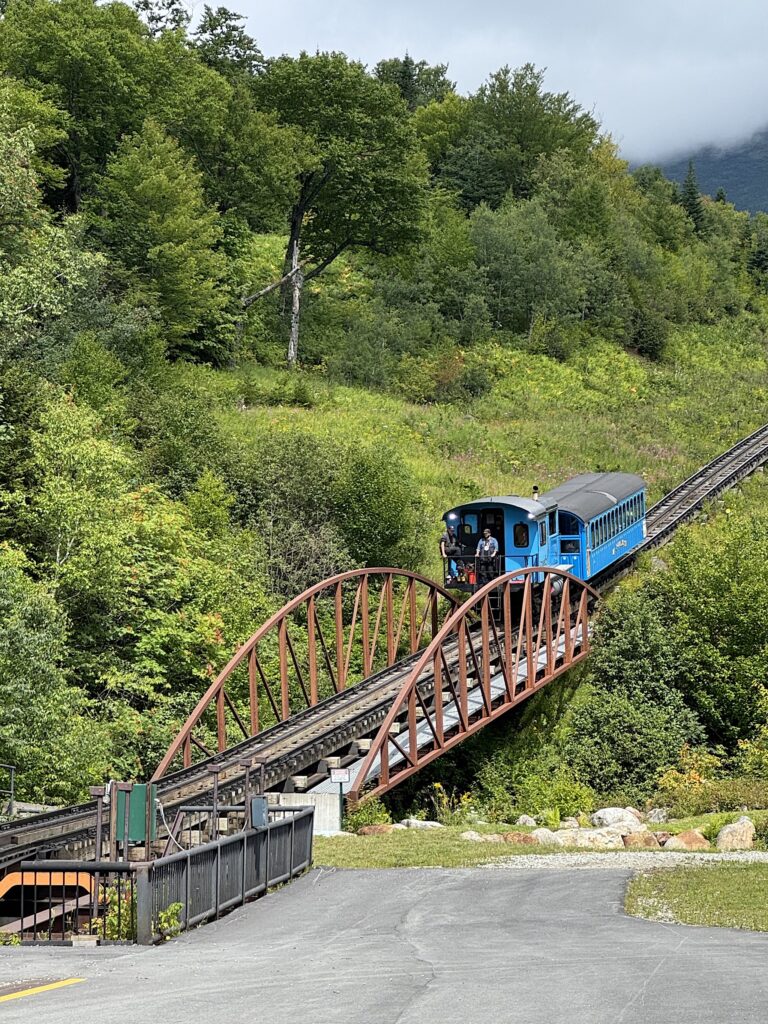
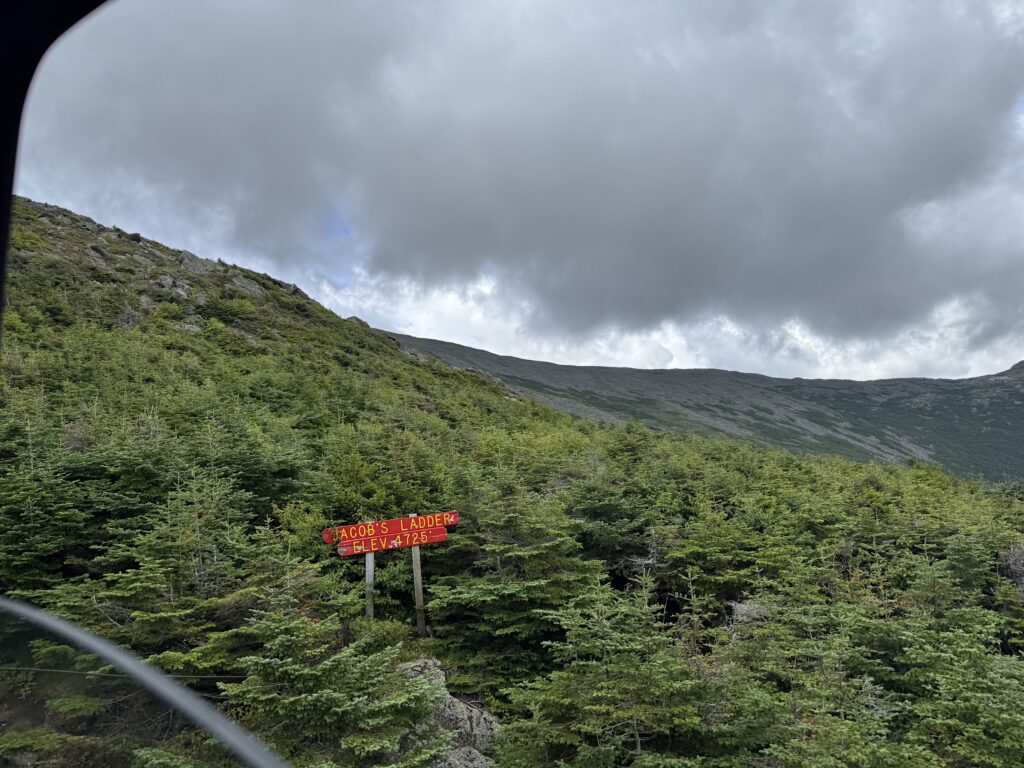
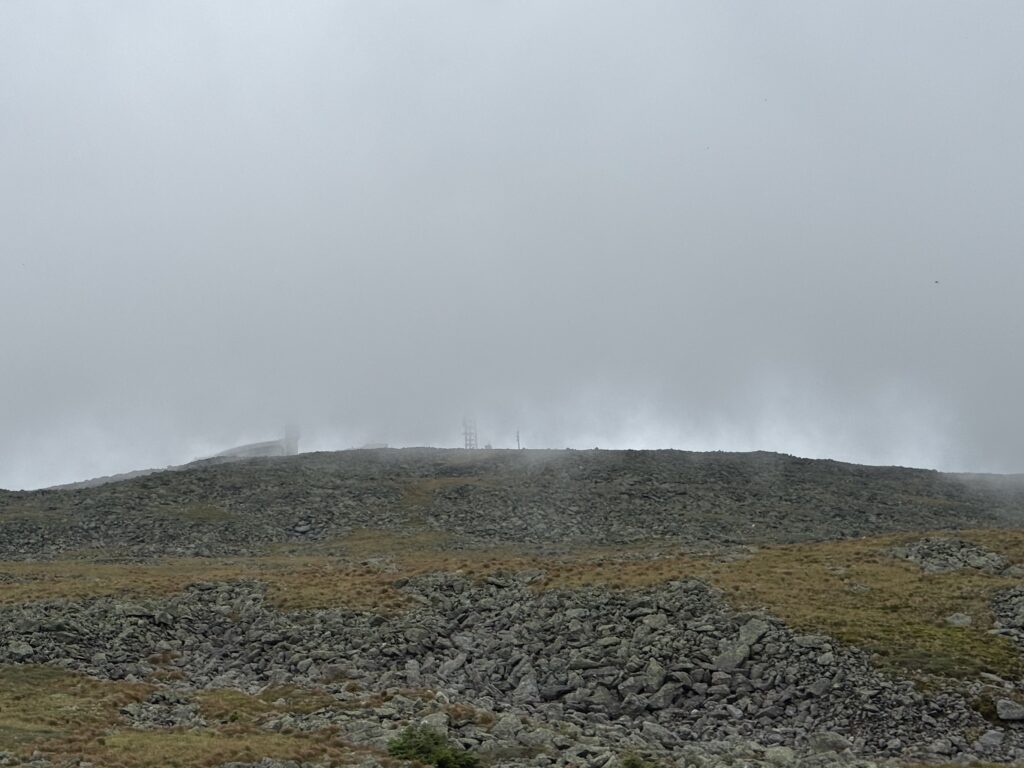
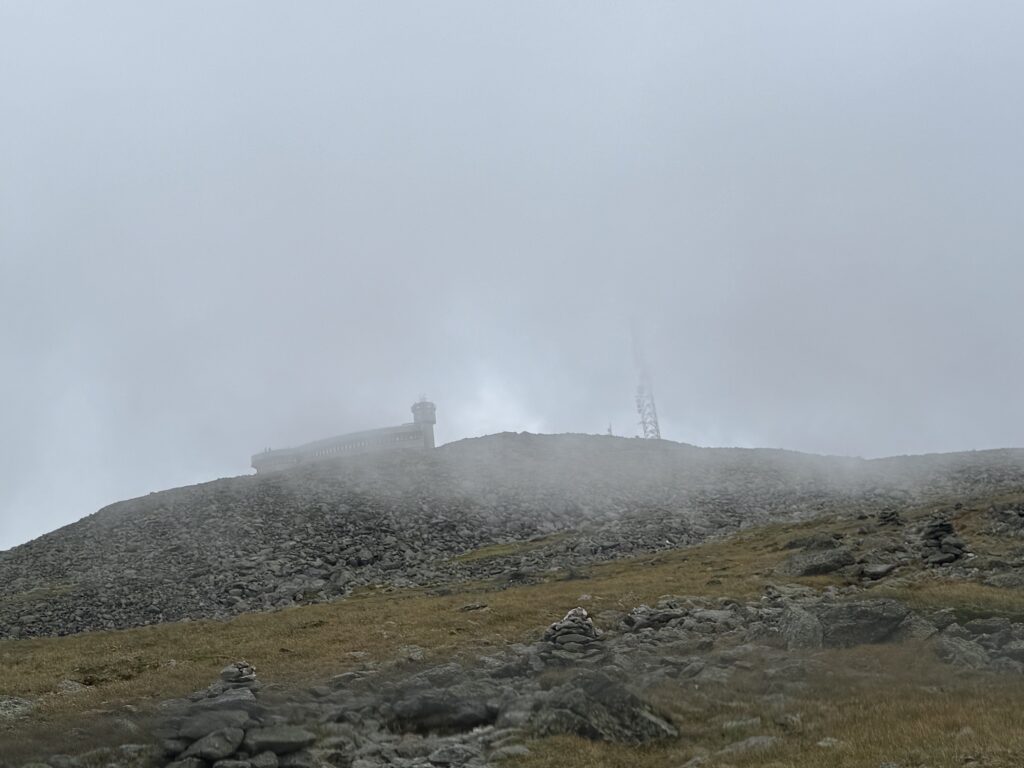
It was mostly clear at the base station, but as we climbed the mountain, you could see clouds and fog wreathing the mountain tops. When we reached the top, you could see the clouds moving in; by the time the returning train arrived at 4:30, the top of the mountain was socked in.
We had about an hour layover at the top. There is a visitor center at the top, with a museum describing the wild weather conditions, and the work of the weather observatory. We weren’t able to go into the Observatory, but I was able to walk around the top. Unfortunately, my phone’s battery had drained during the course of the day and I wasn’t able to take as many pictures as I’d liked.
The return train arrived shortly after 4:30, its headlight shining through the fog. Once it pulled into the station, it loaded up for the last trip down of the day. As we descended, we emerged back into sunlight. Soon we were back at the base station, and I hopped back on the motorcycle for the trip back to Attitash.
Wednesday
Wednesday was a motorcycling day. The plan was to ride back along the Kanc, and then south along Route 3 until Laconia, or thereabouts. I started the day once again at the Rise and Dine, then headed south onto the Kancamancus, into Lincoln, then followed Route 3 south. This stretch of Route 3 is really nice on a motorcycle — very little traffic, scenic, and in good condition.
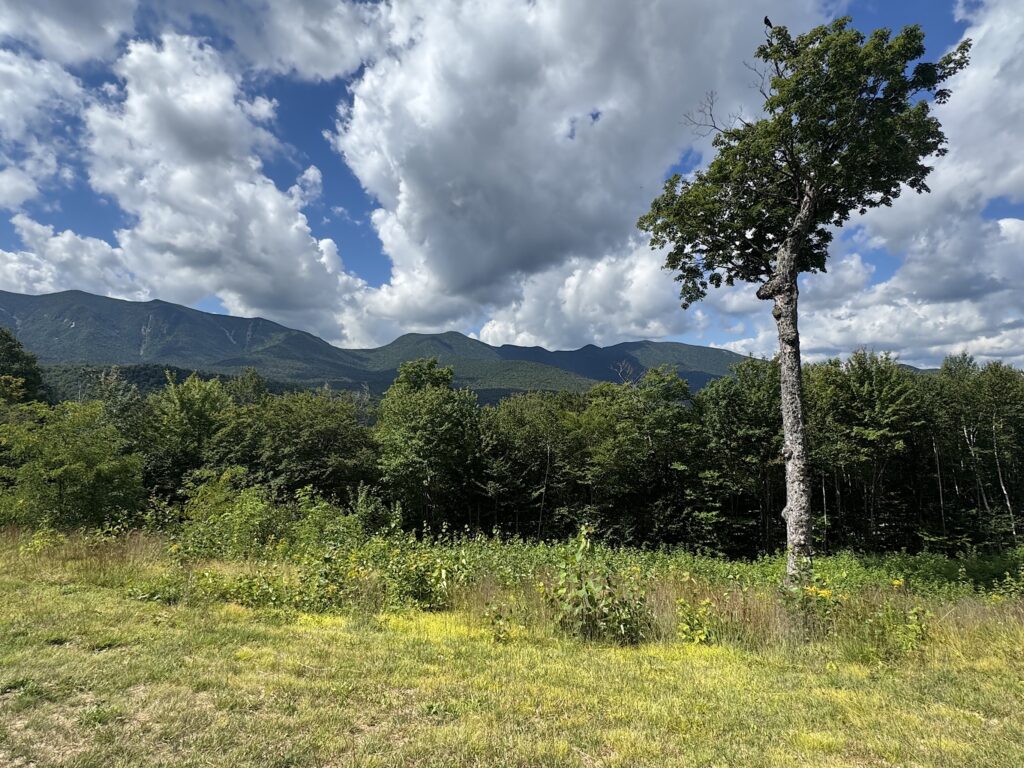
One of the things I try to do when heading south through New Hampshire is stop in on my mother’s cousin when I can. She’s in an assisted living facility in Concord. We had a very pleasant visit for an hour or so before it was time for me to get back on the road.
I got back home around 6, and after unpacking, immediately headed for the jacuzzi to ease my aching back.
Thursday
When I was mentally sketching out my plans for the week, I’d left Thursday empty, because I was expecting it to be rainy. This turned out not to be the case. Thursday was bright and sunny, and I really didn’t feel like spending it doing chores, and didn’t want to spend another day on the motorcycle, so I put the bicycle in the back of the Jeep, and headed for the Cape Cod Canal. I parked on the Sandwich side, and rode the bike path to the end and back. I was feeling really good about myself on the outbound leg — I was zipping right along, and figured I was getting into better shape. And then I turned around, and realized I was now riding into the wind, and going much slower. Still I chugged along, and decided when I was done that I was very much deserving of an ice cream.
Friday
I’d heard at the beginning of the week that they were taking USS Constitution out into the harbor on Friday, and that it would be visible from Castle Island, so I headed in, getting there around 10:15 or so. I found I could look down the length of the harbor, and with the Nikon’s lens set to 300mm, just make out the ship heading out in the company of a tug and a bunch of police boats. Slowly, it made its way out of the harbor, until it was just even with Castle Island, where it turned, and fired as salute, which was answered by some howitzers set up in front of Fort Independence
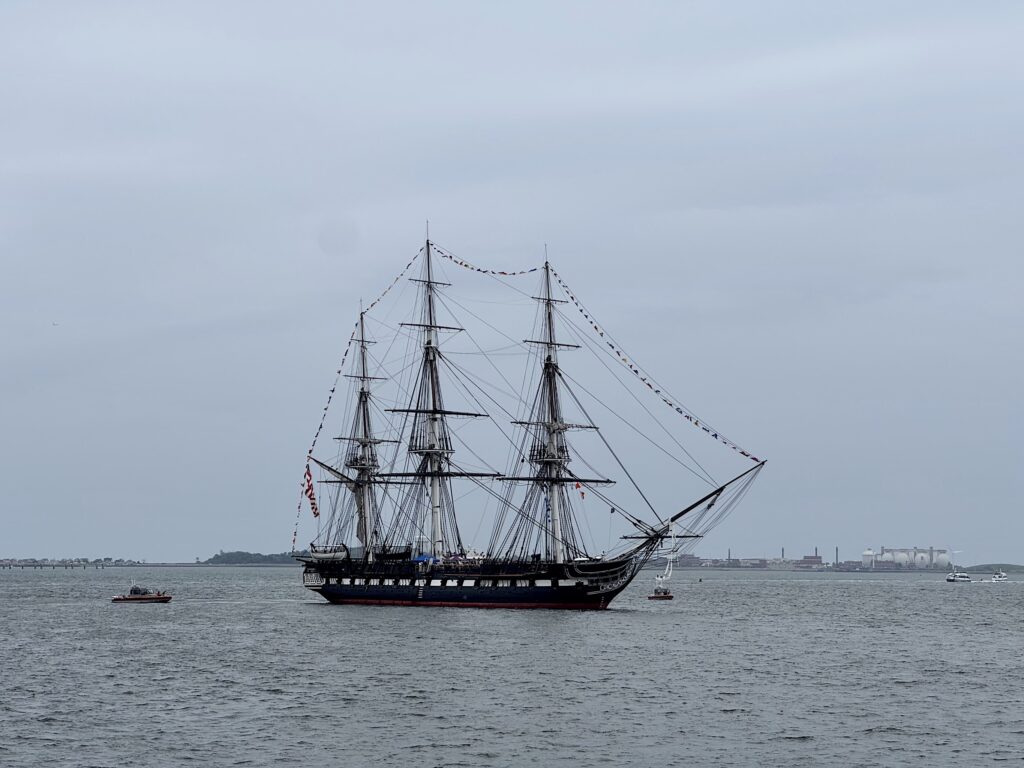
Once the ship turned around, I took a quick walk around Castle Island, then headed into Cambridge for a quick walk around Harvard Square.
Saturday
I have a modest interest in art. I do like going to art museums and looking at the paintings. I find my interest lasts for an hour or so, and then I’m “arted out”. Saturday, I decided to head into the Isabella Steward Gardner Museum with my sister Nancy.
The Gardner is an interesting place. Mrs. Gardner was a very wealthy woman with an interest in art who got into art collecting. Over the course of a couple of decades, she amassed a large collection, and when her husband died, decided to create a place, then called “Fenway Court”, where the public could view her collection. She arranged her collection meticulously, and then set up her will, the terms of which dictated that her trustees would maintain the collection unchanged in perpetuity. They are not allowed to make any kind of permanent change to the way the collection is presented, or the whole thing will be forfeited. The museum is a four story mock Spanish “palace”; the bottom three floors are public, while she lived on the fourth floor. There is a glass covered atrium in the center, filled with flowers, while ringing the atrium are a series of rooms displaying her treasures. There are paintings, there are a number of tapestries, some of which are over 500 years old, there are sculptures, and there a number of everyday items.
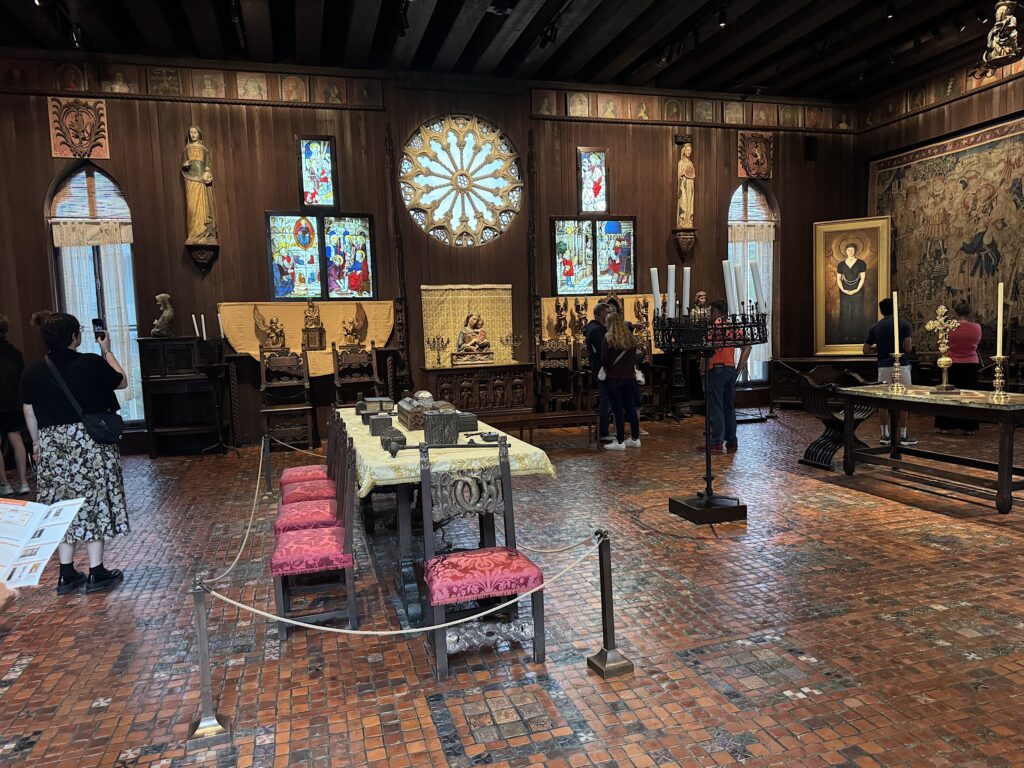
It felt like we timed our visit just right; it was becoming noticeably more crowded as we left. Overall, a nice end to a good week off.